The Wealth of Nations (An Inquiry into the Nature and Causes of the Wealth of Nations), published by Scottish economist and philosopher Adam Smith on March 9, 1776, is the foundational text of classical economics and modern capitalism.
"It is not from the benevolence of the butcher, the brewer, or the baker that we expect our dinner, but from their regard to their own interest." — Adam Smith, The Wealth of Nations (1776)
The Three Natural Laws
The Law of Self-Interest: People work and make economic choices to benefit themselves. This individual drive acts as the main engine for general economic activity and productivity.
The Law of Competition: Business owners compete with one another for consumer business. This competition forces companies to improve product quality, innovate, and keep prices low.
The Law of Supply and Demand: A free market produces enough goods at the lowest possible price to meet public demand. Prices rise when demand is high and supply is low, and they fall when supply exceeds demand, balancing the market naturally.
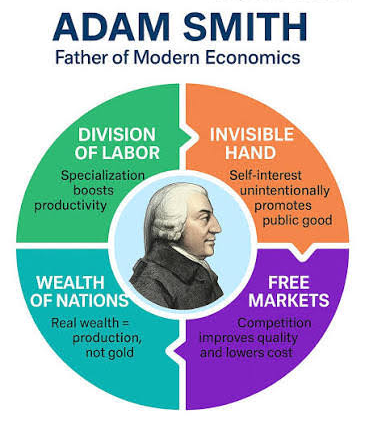
Definition of Wealth: Smith argued that a nation's true wealth is measured by the total output of its goods and services (national income produced by labor, land, and capital), rather than the amount of gold or silver in a monarch's treasury.
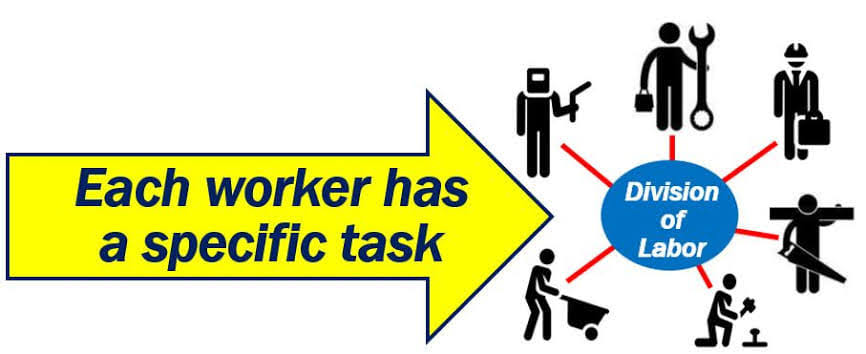
Division of Labor: Specializing tasks (illustrated by his famous pin factory example) drastically boosts worker efficiency through repeated practice, time saved, and innovation in machinery.
Prosperity is heavily driven by specialization. Smith famously illustrated this with a pin factory: one untrained worker might struggle to make a single pin a day, but ten specialized workers dividing the tasks (drawing wire, cutting, sharpening) could produce over 48,000 pins daily. Division of Labour
The Invisible Hand: Free-market competition guides individuals who are pursuing their own self-interest to unintentionally promote the broader good and economic equilibrium of society. Smith argued that individuals pursuing their own rational self-interest inadvertently promote broader societal wealth. A business owner improves products and lowers prices to beat competitors, which naturally optimizes supply, demand, and resource allocation without government planning. Self interest promotes economics growth
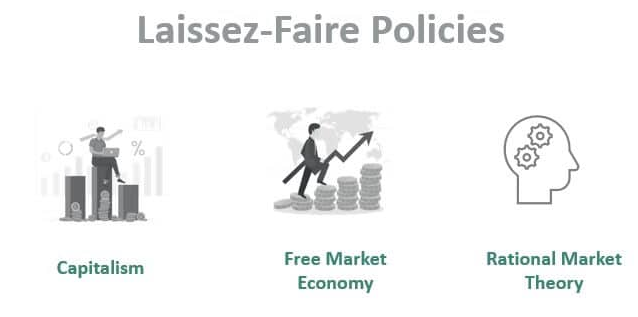
Limited Role of Government The state should stay out of market operations, as intervention often causes artificial surpluses or shortages. Instead, Smith limited government duties to national defence, internal law and order, maintaining public infrastructure, and providing basic education.
Smith maintained that the government should stay out of everyday economic affairs, restricting its responsibilities to three core duties:

Comments (0)
No comments yet. Be the first to share your thoughts.