Education
AUSTRALIA RAISES CONCERNS OVER AI USE IN EDUCATION
October 6, 2026 · 16 views ·by Emma-Golden
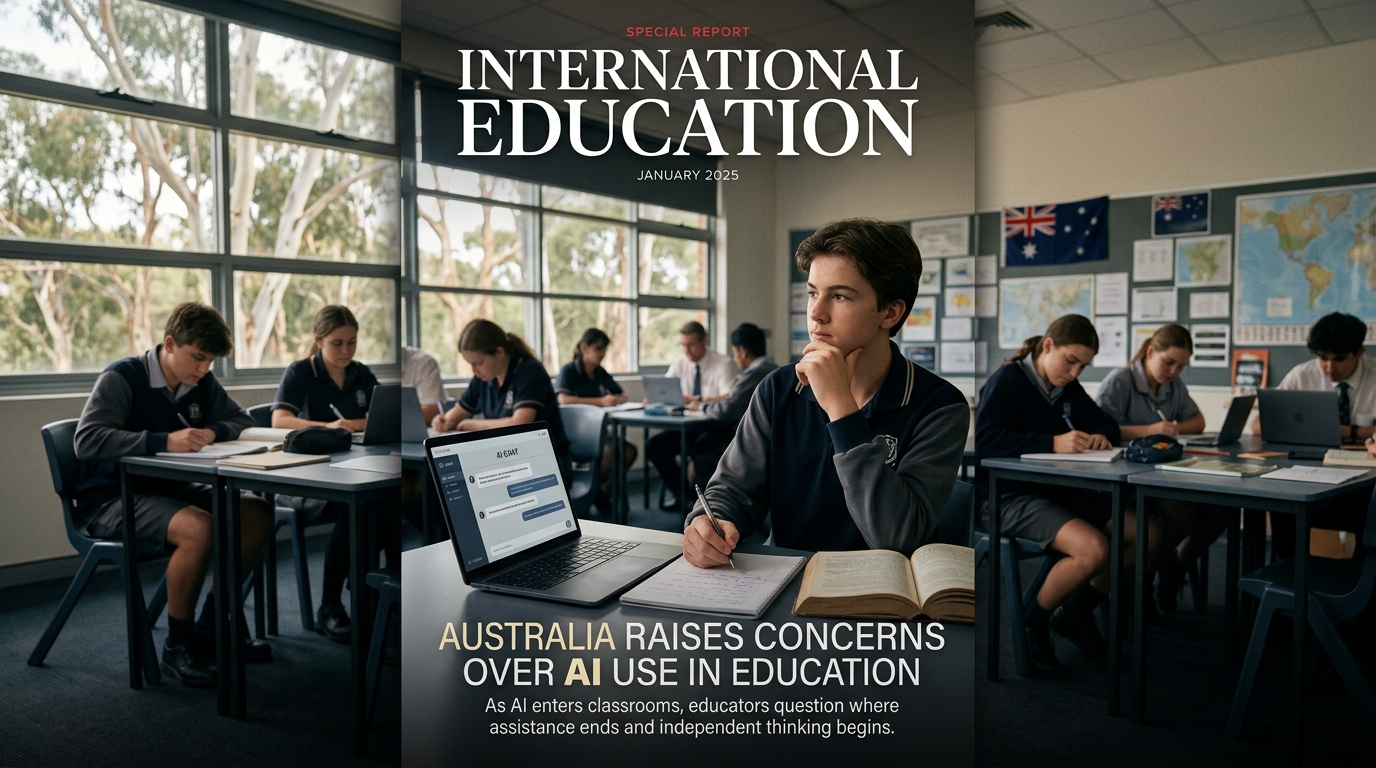
AUSTRALIA RAISES CONCERNS OVER AI USE IN EDUCATION
Australia is taking a closer look at the growing use of artificial intelligence in schools, as education officials warn that students may be relying on AI chatbots more than they should.
The Australian Department of Education has raised concerns that excessive use of AI could affect students’ ability to think independently, solve problems and develop critical-thinking skills.
The concern is not simply that students are using AI.
Rather, it is how much of the learning process AI is beginning to handle.
Rather, it is how much of the learning process AI is beginning to handle.
A student using AI to explain a difficult topic may be getting useful support.
But a student asking a chatbot to write an entire assignment, solve every problem or summarise everything without engaging with the material may be missing an important part of education: actually learning how to think through a problem.
Australia is also looking more closely at the amount of time students spend using digital devices for schoolwork and homework.
Officials have raised concerns that increased screen use does not automatically translate into better educational outcomes, with discussions now taking place about finding a healthier balance between digital tools and traditional learning methods.
AI Is Not Being Banned
Despite these concerns, Australia is not simply rejecting artificial intelligence in education.
AI has clear potential to support teachers, explain difficult concepts, provide learning assistance and make some educational tasks more efficient. The challenge is finding the right balance.
The debate is increasingly moving from “Should students use AI?” to “How should students use AI without becoming dependent on it?”
That concern is also appearing outside the classroom.
The Federal Court of Australia has warned lawyers about the risks of relying on generative AI after AI-generated material was found to contain false or fabricated legal references. The warning reinforces a wider lesson: AI can produce information that sounds convincing while still being wrong, making human verification essential.
For education, the implications are significant.
If students grow accustomed to allowing AI to do the difficult thinking for them, they could become highly skilled at getting answers without developing the ability to reach those answers themselves.
Australia's experience highlights a challenge that education systems around the world are now facing: how to embrace one of the most powerful educational technologies available without allowing it to replace the human thinking that education is designed to develop.
Comments (0)
No comments yet. Be the first to share your thoughts.