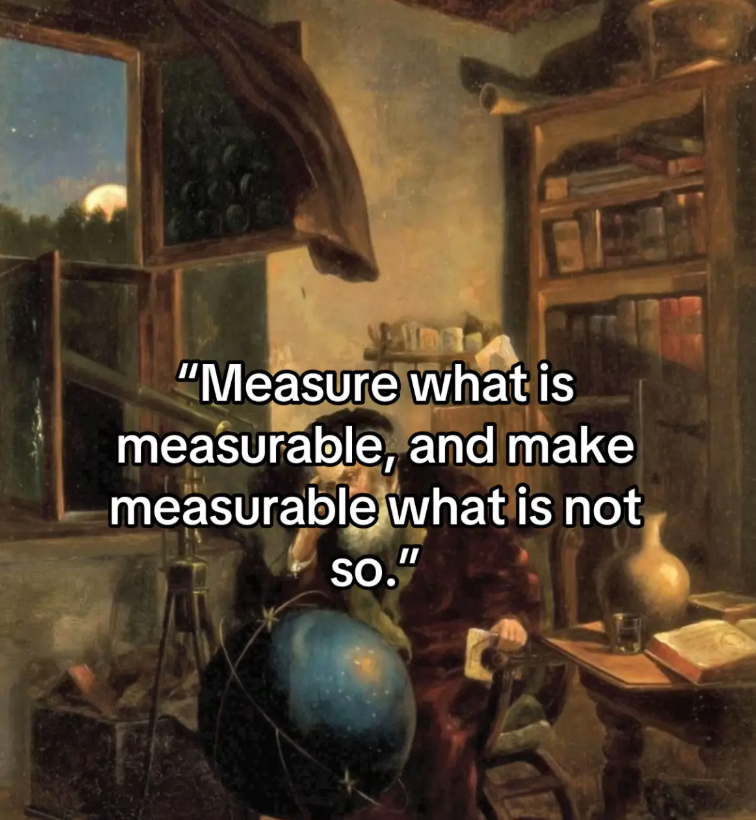
if something can be measured or its effect can be felt, then it is definitely on path of discovery.
"Science assumes truths are waiting to be measured, tested, and refined through repeated experiments".
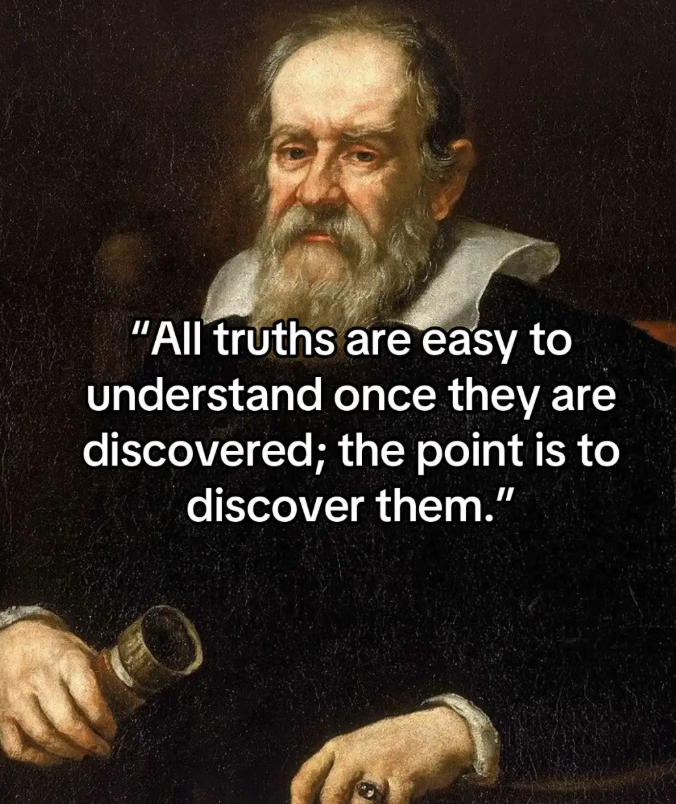
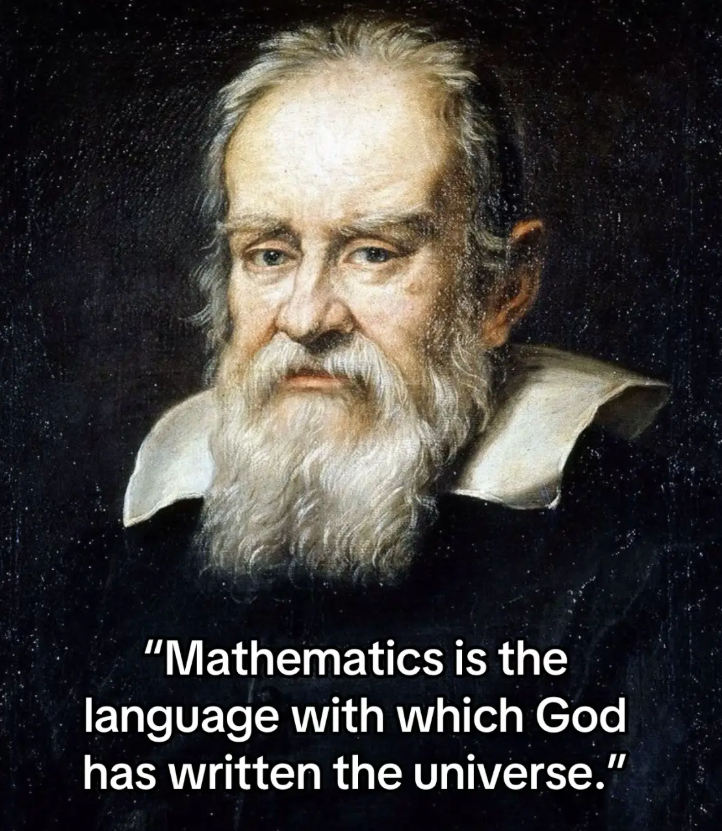
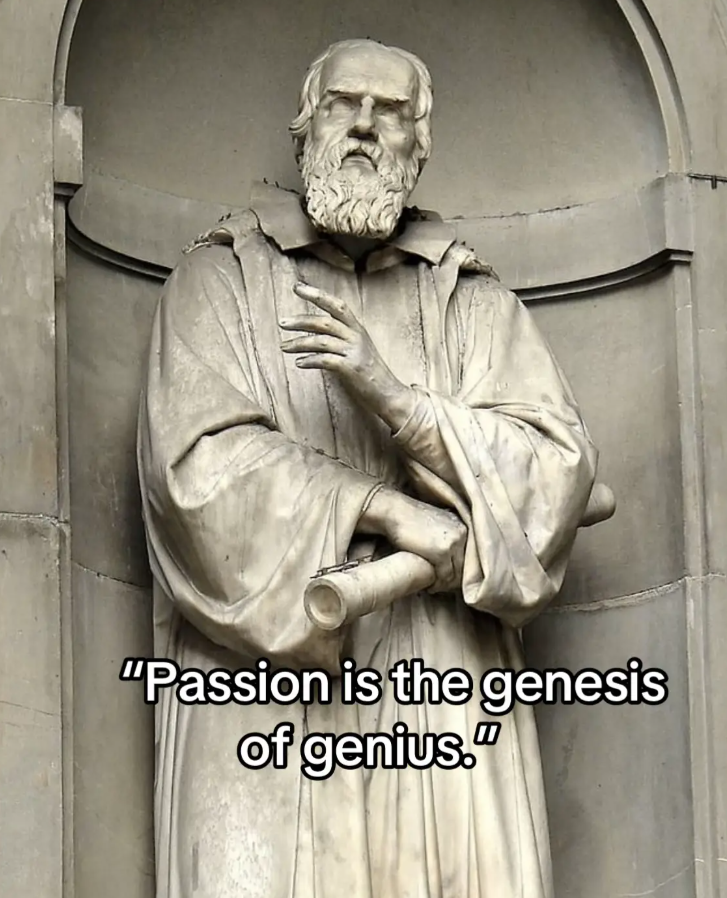
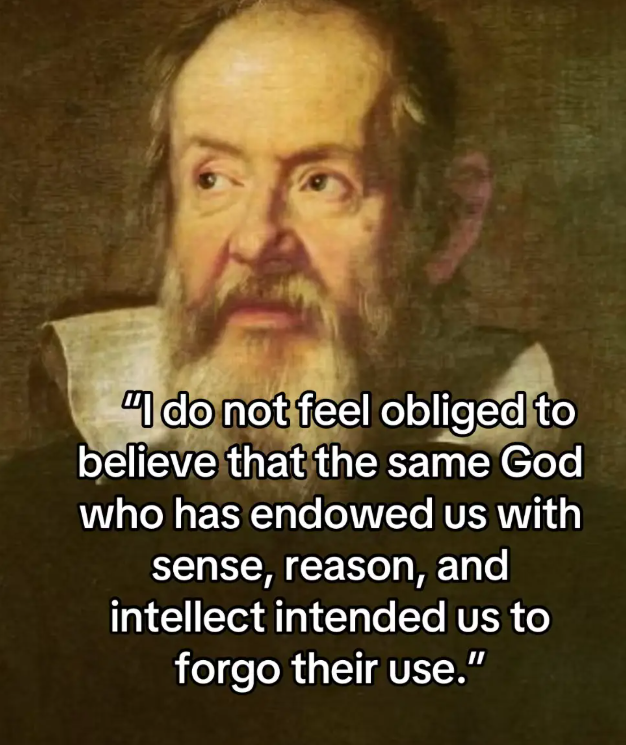
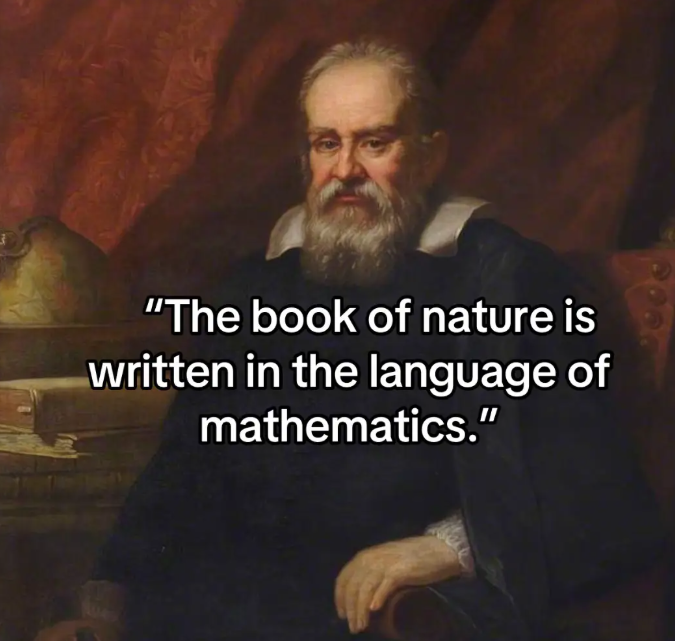
Galileo Galilei (1564–1642) was an Italian polymath who revolutionized astronomy and physics. By improving the telescope, he discovered the four main moons of Jupiter, the phases of Venus, and lunar craters, proving that the Earth is not the center of all celestial orbits . All Truth depends on discovery
All Truth depends on discovery
The Nature of Truth and Discovery
Independent Reality: Laws of nature like gravity exist before humans name or measure them.
The Role of Curiosity: Observation, math, and testing act as the tools used to pull facts out of the dark.
Simplicity After Revelation: Once a truth is found, it often looks obvious and self-evident.
Galileo Galilei (1564–1642) was an Italian scientist whose discoveries helped transform astronomy and physics and whose methods—systematic observation, careful measurement, and mathematical description—made lasting contributions to how science is done. Using an improved telescope, he observed the Moon’s surface, showing it was not smooth but uneven, and he discovered that Jupiter had four moons, now called the Galilean moons (Io, Europa, Ganymede, and Callisto), demonstrating that not everything orbited Earth. He also observed phases of Venus, which supported the heliocentric model by showing Venus’s changing appearance was consistent with it orbiting the Sun. In addition, Galileo studied sunspots and the Sun’s rotation, providing evidence that the heavens were not immutable. His work on motion and mechanics further advanced physics: he argued that acceleration could be treated mathematically and described how objects move under uniform acceleration, laying groundwork for later developments in dynamics.
Although his support for heliocentrism brought him into conflict with religious authorities and led to his trial and restrictions on teaching, his scientific results and his insistence on observation and mathematical explanation endured. Galileo’s influence persisted through the spread of his findings, the continued refinement of telescopic astronomy, and the broader shift toward experimental and quantitative approaches that shaped modern science.
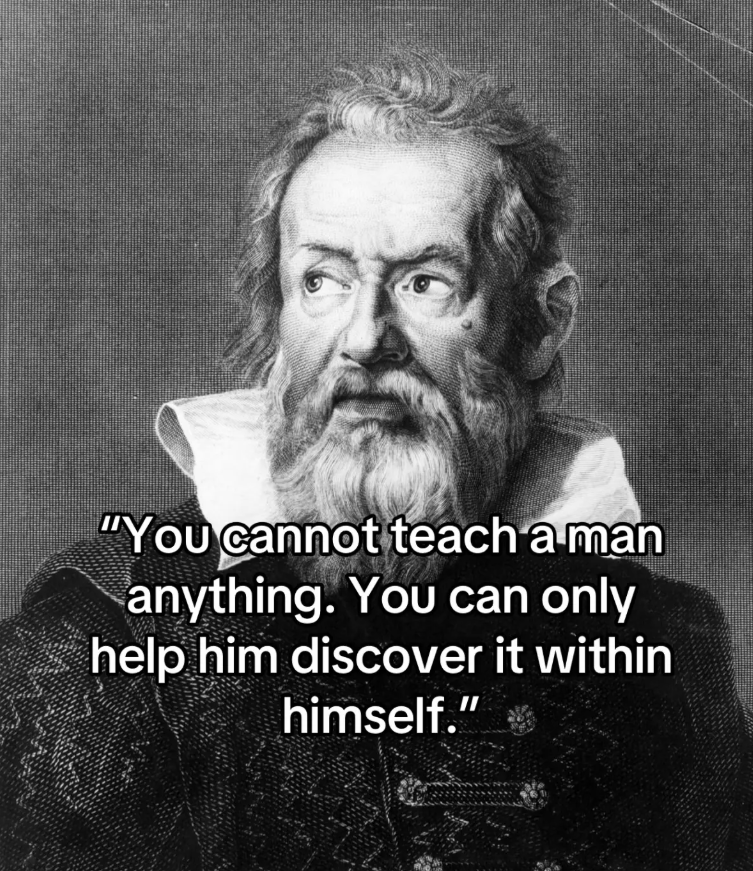
Self discovery Self Discovery Learning is awakening: Information from the outside only matters if it sparks an inner connection.
The role of a guide: A good teacher does not force facts. They ask good questions and set up the right environment.
Personal truth: Facts memorized by force fade away, but truths found by personal thought stay with a person forever.
Key Astronomical Discoveries
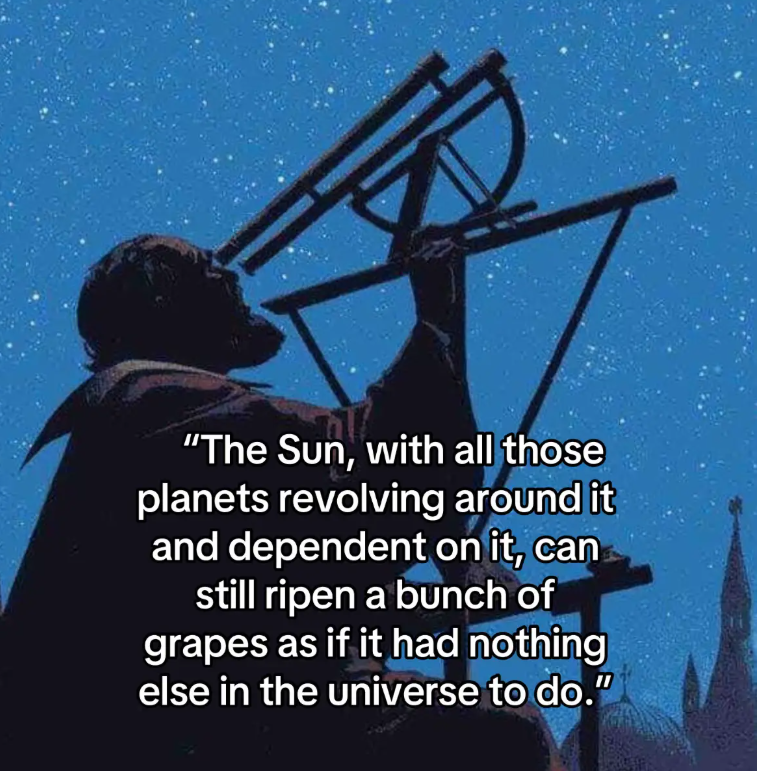
1. Moons of Jupiter: Found four small bodies orbiting Jupiter, proving not everything revolves around Earth.
2. Phases of Venus: Showed Venus circles the Sun much like our Moon circles Earth.
3. Surface of the Moon: Saw mountains and craters, proving the Moon is not a smooth, perfect sphere.
4. Milky Way Stars: Resolved the hazy galaxy into countless individual stars.
Physics and Method
1. Laws of Motion: Studied gravity, velocity, and the way objects fall.
2. Scientific Method: Used experiments and math instead of old philosophy to test ideas.
The Conflict: Supported the Sun-centered universe, which led to a heresy trial by the Catholic Church and house arrest.
Instrumental Inventions & Legacy Galileo was an exceptional craftsman and practical engineer who gave scientists the physical tools needed to measure and quantify nature:
The Thermoscope: Invented an early precursor to the modern thermometer to measure variations in temperature.
Sector / Military Compass: Designed a highly accurate geometrical and military compass used by gunners and surveyors for calculations.
The Scientific Method: Shifted science away from purely abstract philosophy toward a system built on systematic observation, math, and reproducible experiments.
Comments (0)
No comments yet. Be the first to share your thoughts.