Education
Built to Endure : If failure is a medicine, I will take it. If fear is a horse, I will ride on it.
August 11, 2026 · 19 views ·by Odeyemi Oluwafemi
------If failure is a medicine, I will take it. If fear is a horse, I will ride on it. (Ódeyemi)
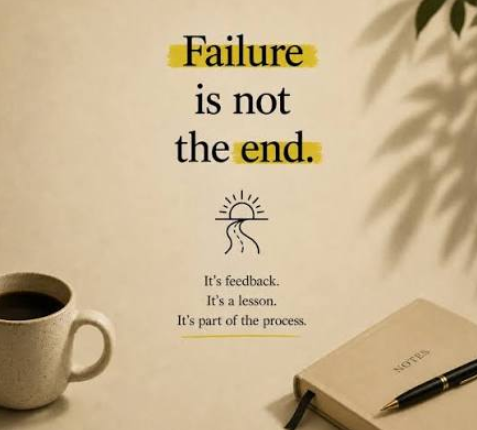
Failure is not the end. It's feedback. It's training. It's growth. Every setback is a lesson. Every mistake is a setup for improvement.
Be ready to face hard times and win over fear.
-----With every failure, comes opportunity to make adjustments.
-----Those who never failed have never try anything new
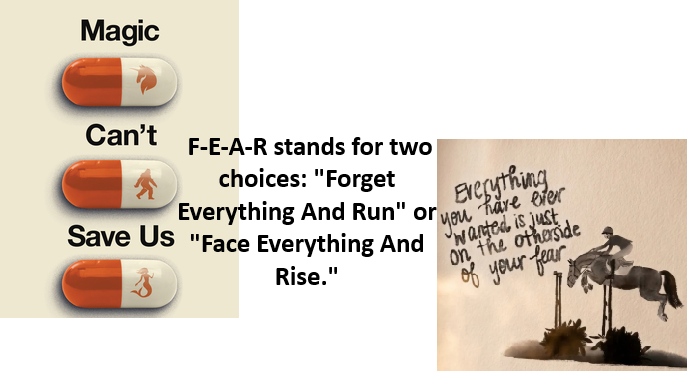
We should treat setbacks as inputs for learning and improvement, and approach fear as a controllable force that can be used to move forward rather than avoid.
Facing Hard Times
1. Take the bitter pill: You accept failure to learn and grow.
2. Tame the wild beast: You take control of fear instead of letting it run you.
Standing Strong
1. No running away: You choose to stand up to hard tests.
2. Keep moving: You push forward even when the path is steep.
💊 Failure as Medicine
- It cures ignorance: Failure shows you exactly what does not work.
- It builds immunity: The more you survive it, the less it paralyzes you.
- It forces correction: Like a bitter pill, it tastes bad but makes you stronger.
🐎 Fear as a Horse
- It provides energy: Fear triggers adrenaline, which can be channeled into intense focus.
- It moves you forward: Instead of letting fear block your path, you sit on top of it and control its direction.
- It demands mastery: Riding a wild horse requires grip, balance, and grit—the exact traits of endurance.
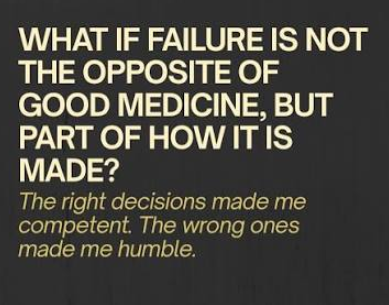
If failure is a medicine, I will take it immediately, because it reliably produces measurable outcomes: it exposes what does not work, clarifies constraints, and forces adjustment of inputs such as strategy, effort, timing, and resources.
Each failure would be treated as a dose with a specific purpose—diagnose the cause, document the result, and update the plan—so the “side effects” become actionable data rather than discouragement. I would track dosage and response over time, compare outcomes against prior attempts, and only change one major variable at a time to isolate what improves results. By repeating this process, failure would become a controlled treatment that strengthens decision-making, reduces repeated errors, and increases the probability of success with every iteration.
Each failure would be treated as a dose with a specific purpose—diagnose the cause, document the result, and update the plan—so the “side effects” become actionable data rather than discouragement. I would track dosage and response over time, compare outcomes against prior attempts, and only change one major variable at a time to isolate what improves results. By repeating this process, failure would become a controlled treatment that strengthens decision-making, reduces repeated errors, and increases the probability of success with every iteration.
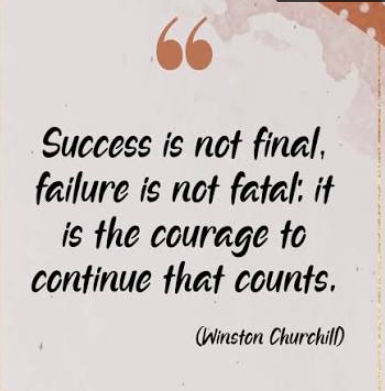
If failure were a medicine, I would take it in measured doses and track the effects: it would reduce my tolerance for excuses, expose weak assumptions, and convert mistakes into actionable data. If fear were a horse, I would mount it deliberately, keep my posture steady, and use its energy to move forward rather than freeze—testing its strength in controlled situations, learning its patterns, and directing its momentum toward goals. In both cases, I would treat the experience as a tool, not a verdict: failure would inform what to change, and fear would indicate what to practice, so that each becomes a reliable input for improvement.
Comments (0)
No comments yet. Be the first to share your thoughts.