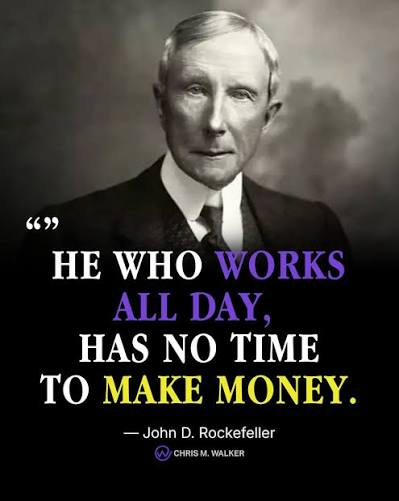
"I always tried to turn every disaster into an opportunity," "Don't be afraid to give up the good to go for the great," and "I would rather earn 1% off a 100 people's efforts than 100% of my own efforts." (John D. Rockefeller)
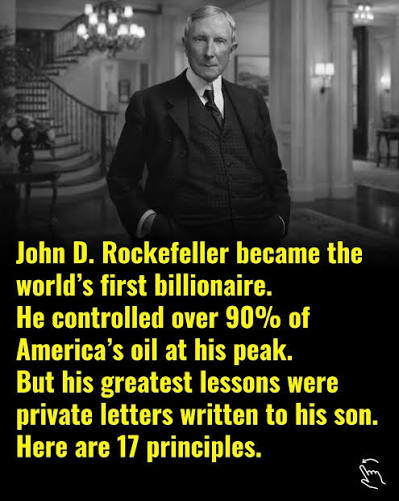
John D. Rockefeller (1839–1937)was an American oil industrialist who became the dominant figure in the early U.S. petroleum industry through a combination of scale, engineering-minded logistics, and relentless cost control. After entering the oil business in the late 1850s, he helped standardize and expand refining operations, emphasizing efficient processing and distribution rather than speculative drilling. Rockefeller’s companies—most notably Standard Oil—built durable infrastructure and systems for storage, transport, and refining, including large-scale pipelines, railcar and tank storage networks, and standardized operating practices that reduced waste and improved reliability. By consolidating refineries and negotiating aggressively with railroads and suppliers, Standard Oil achieved lower per-unit costs and more consistent output, allowing it to outlast less efficient competitors.
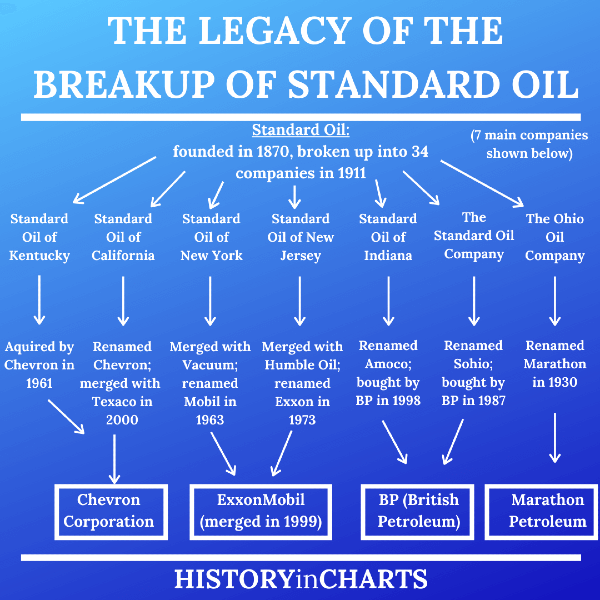
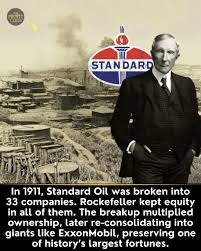
the standard oil company broken into other empire His approach treated the oil supply chain as an engineered system: secure inputs, optimize throughput, and maintain dependable distribution. Although his business methods drew intense public criticism and led to major legal action, including the 1911 U.S. Supreme Court decision that broke up Standard Oil under antitrust law, Rockefeller’s legacy remains tied to industrial organization and long-term operational endurance in a rapidly changing energy market.
John D. Rockefeller built Standard Oil into an industrial empire by prioritizing efficiency, consolidation, and tight cost control over quick profits. Founded in 1870, the company systematically absorbed or eliminated competitors until it controlled approximately 90 percent of American oil refining by the early 1880s. Even after the U.S. Supreme Court ordered its dissolution under federal antitrust laws in 1911, the fragments of his empire laid the foundation for modern corporate structures and contemporary energy giants.
Mastermind of Industrial Consolidation
Meticulous bookkeeping: Kept a ledger tracking every single penny from his teenage years.
Horizontal integration: Acquired rival refineries rapidly to eliminate market volatility and competition.
Vertical integration: Controlled the entire supply chain, including pipelines, barrel making, and distribution networks.
Aggressive negotiation: Leveraged massive shipping volumes to secure secret rebates from major railroads.
Ruthless cost cutting: Focused on extreme operational waste reduction, down to the exact number of solder drops per oil can.
Comments (0)
No comments yet. Be the first to share your thoughts.