Business Ideas & Implementation
Built to Endure: Reed Hastings, the Man who built on top of his own ashes
August 11, 2026 · 35 views ·by Odeyemi Oluwafemi
Service to humanity is the best works of Life, find a problem and build solution around
Reed Hastings famously built Netflix by systematically destroying his own core business models twice—first killing late fees and the traditional video store format with mail-order DVDs, and then aggressively pivoting to streaming in 2007 when DVDs were still highly profitable, surviving a 90% stock plunge to pioneer modern entertainment.
Reed Hastings built Netflix by turning personal failure into operating discipline, and the company’s origin story is inseparable from his willingness to start over. Before Netflix, Hastings co-founded Pure Software, which he led through rapid growth and a successful public offering, but the company’s stock collapsed during the dot-com downturn and he was forced to confront how quickly technology businesses could burn through capital and confidence. Rather than retreat, he used the lessons of that collapse—how to manage risk, how to focus on repeatable customer value, and how to build systems that could survive volatility—to shape his next venture. In 1997, Hastings and Marc Randolph launched Netflix as a DVD-by-mail service, initially competing against established rental stores by offering convenience, selection, and a subscription model that reduced late fees and made demand more predictable. The company’s early strategy reflected a “built to endure” mindset: invest in logistics and customer experience, iterate quickly, and use data to refine recommendations and inventory decisions. As streaming emerged, Netflix again rebuilt on its own foundations, shifting from physical distribution to a digital platform and using its existing customer base and analytics capabilities to accelerate the transition. Hastings’ leadership emphasized long-term bets—such as licensing and later original programming—while maintaining operational focus on scale, reliability, and cost control, even as the industry’s economics changed. By the time Netflix became a global streaming giant, its resilience was not just a product of market timing; it was the result of Hastings repeatedly applying the same core principle: treat setbacks as inputs, rebuild the business model when necessary, and design the organization to keep functioning through disruption.
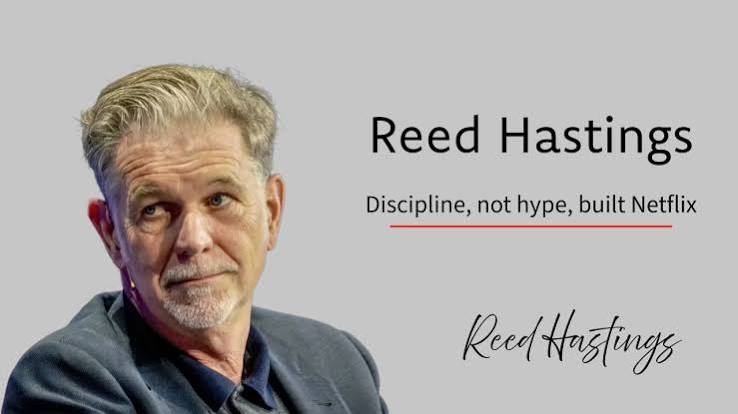
Reed Hastings did not just build Netflix; he repeatedly destroyed his own successful business models to build something greater. His legacy is defined by a rare willingness to obsolete his own creations before competitors could do it for him.
🧱 The First Ash: Pure Software
In 1991, Hastings founded Pure Software.
- The Business: It created troubleshooting tools for software developers.
- The Growth: The company doubled its revenue every year.
- The Crisis: Rapid growth brought bureaucratic processes that killed innovation.
- The End: Rational Software acquired the company in 1997.
- The Lesson: Hastings hated the rigid bureaucracy he introduced. He vowed to manage his next company differently.
📦 The Second Ash: The DVD-by-Mail Empire
In 1997, Hastings co-founded Netflix.
- The Innovation: No late fees. Monthly subscriptions.
- The War: Blockbuster dominated the video rental market
- The Victory: Netflix outlasted Blockbuster by leveraging a seamless shipping algorithm.
- The Pivot: At its peak, Hastings shifted focus away from DVDs. He knew physical discs were dead software.
🌐 The Third Ash: The Qwikster Debacle
In 2011, Hastings tried to split Netflix into two separate businesses.
- The Plan: Stream scaled-down video online. Move DVDs to a new site called Qwikster.
- The Backlash: Customers faced a 60% price hike to keep both services.
- The Loss: Netflix lost 800,000 subscribers instantly. Stock plummeted by 75%.
- The Recovery: Hastings issued a public apology. He killed Qwikster but kept pushing streaming.
- 🎬 The Fourth Ash: Licensing Hollywood Content
Streaming required content. Netflix initially relied on licensing old movies from traditional studios.- The Threat: Studios realized Netflix was a danger. They threatened to pull their content.
- The Pivot: Hastings chose to compete directly with Hollywood.
- The Bet: Netflix spent billions to create original programming (House of Cards, Orange Is the New Black).
- The Result: Netflix became an independent global studio. It no longer depended entirely on Hollywood's permission.
- ⚔️ The Core Philosophy: "Freedom and Responsibility"
Hastings built a unique corporate culture designed to survive continuous reinvention.- The Keeper Test: Managers must ask if they would fight to keep an employee. If not, give them a generous severance package.
Comments (0)
No comments yet. Be the first to share your thoughts.