Strategic management combined with management control builds an enduring organization by aligning long-term vision with daily execution and continuous performance tracking.
"Hope is not a business strategy, Critical thinking and actions are the way forward".
"Every progress must be back by repeated actions" .
"The divine strategy of man on Earth is to dominate earth through work management".
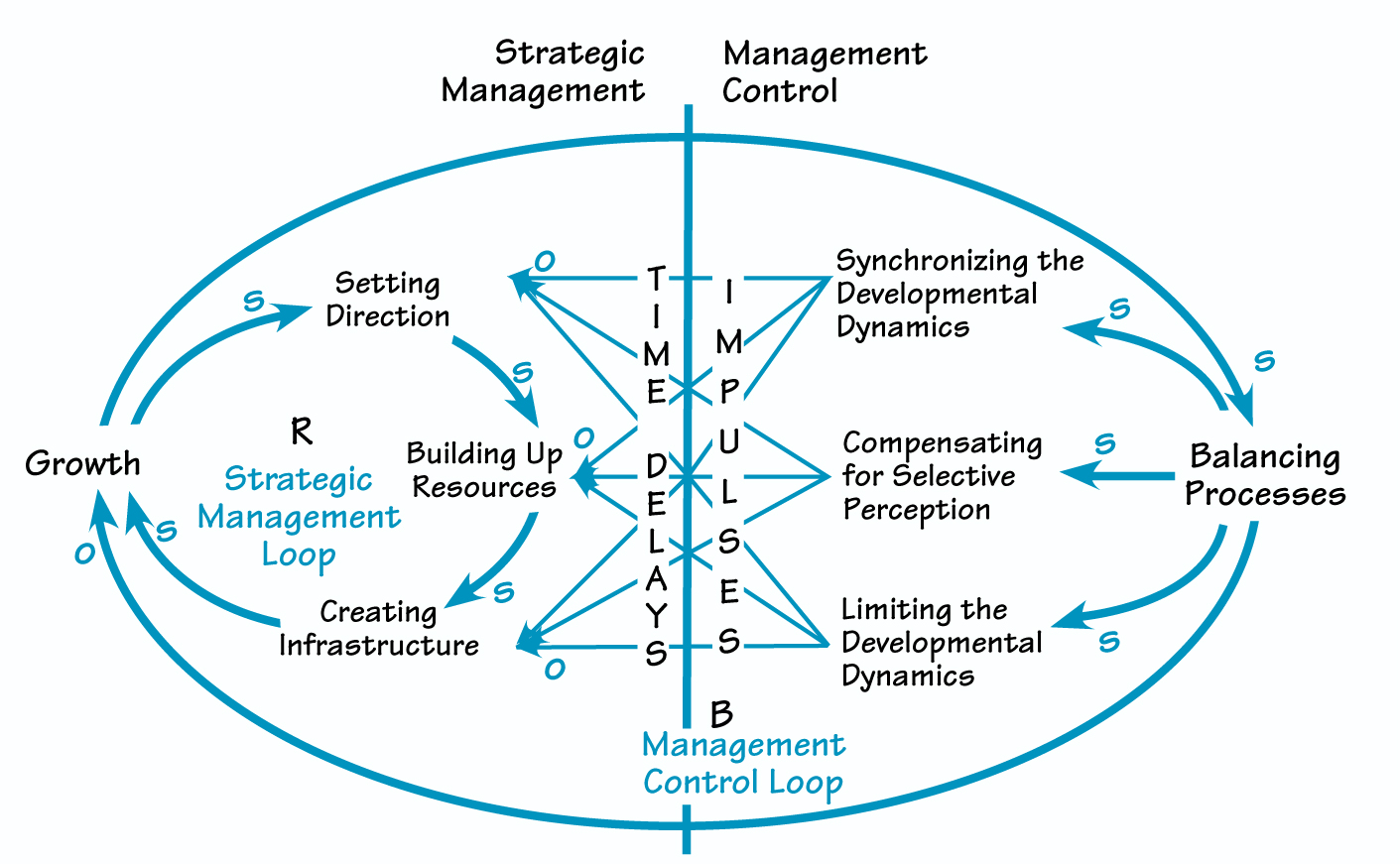
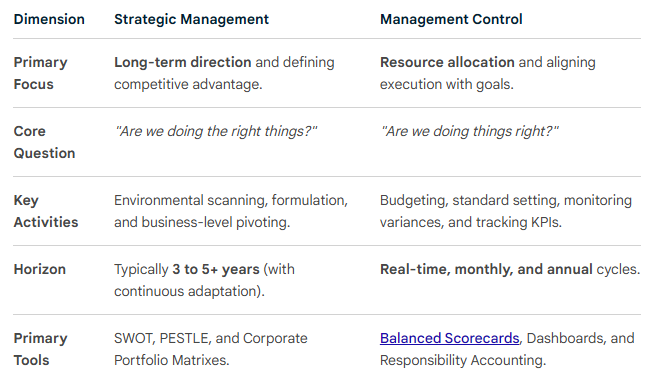
To survive and thrive long-term, an organization must connect its vision to its everyday actions by linking Strategic Management with Management Control. While strategic management sets the broad direction, goals, and positioning for the company, management control functions as the steering system that monitors execution, tracks metrics, and ensures the organization stays on track. Together, they build a resilient foundation that prevents strategic drift.
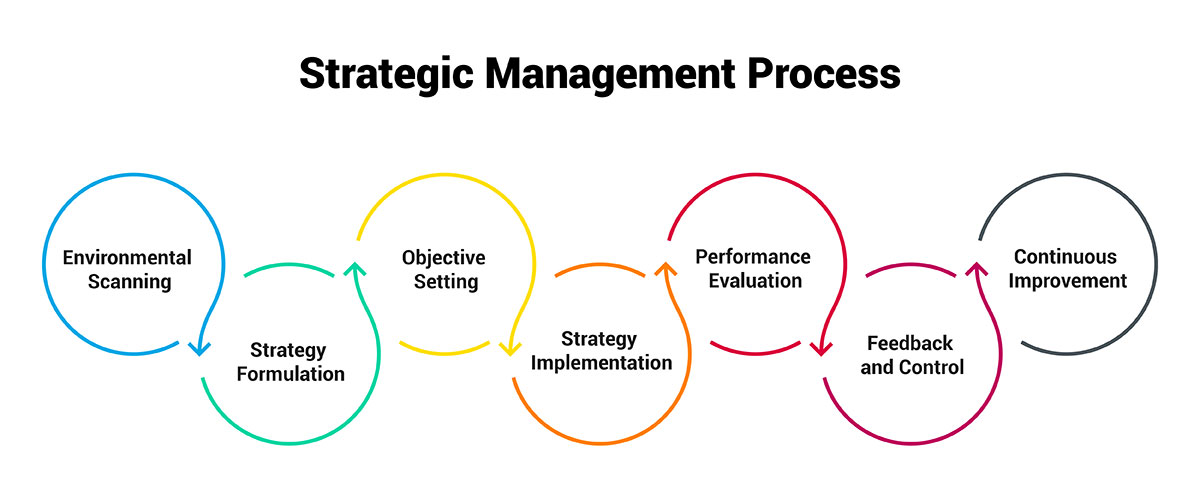
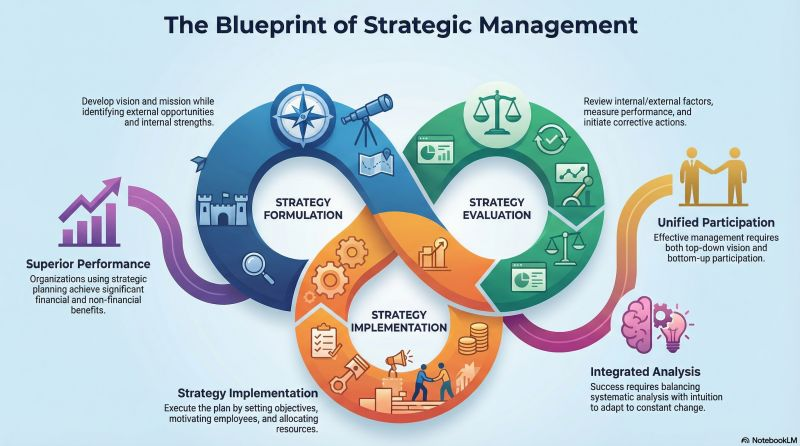
Environmental Scanning: Analyze internal strengths and weaknesses alongside external opportunities and threats using tools like SWOT.
Strategy Formulation: Define the organizational mission, vision, and long-term competitive advantages.
Strategy Implementation: Allocate resources, configure organizational structures, and execute plans across corporate, business, and functional levels.
Strategic Control and Evaluation: Monitor actual performance against planned objectives to catch variances and trigger corrective actions.
Role of Management Control
Diagnostic Control Systems: Track critical(key) performance indicators (KPIs) and budgets to ensure the strategy stays on target.
Interactive Controls: Foster ongoing dialogue between managers and teams to adapt quickly to shifting market conditions. Belief and Boundary Systems: Set core organizational values and clear rules of behavior so employees innovate safely within strategic limits. The holy book, the organisational manual
🧱 The Interlocking Framework
An organization "built to endure" operates as a continuous loop where strategy informs control systems, and control systems provide the feedback needed to adapt the strategy.
Enduring companies do not treat strategy as a static annual book; they treat it as an "always-on" process driven by four control mechanisms:
Premise Control: Continuously tracking whether the core assumptions made during strategy planning (e.g., inflation rates, consumer behavior, technological changes) are still true.
Implementation Control: Monitoring specific projects, budgets, and milestones to catch resource bottlenecks before they stall the business.
Strategic Surveillance: Scanning broad internal and external environments for unexpected threats or disruptive market changes.
Special Alert Control: Rapidly re-evaluating the business strategy in response to sudden, unexpected events (e.g., a supply chain crisis or regulatory changes).
⚖️ Balancing Growth with Guardrails Robert Simons’ classic Levers of Control framework shows how management control protects an enduring business while encouraging growth:
Belief Systems: Core values that inspire employees to seek out new opportunities.
Boundary Systems: Explicit rules detailing what behaviors, risks, or market spaces are strictly forbidden, preventing ethical issues and strategic distraction.
Diagnostic Control Systems: Traditional KPIs that track performance against set targets.
Interactive Control Systems: Regular, hands-on manager check-ins that encourage open dialogue, collaborative problem solving, and quick updates to the strategy.


Comments (0)
No comments yet. Be the first to share your thoughts.