While the phrase "compounding effect" historically brings to mind financial interest multiplying over time, the true "new magic" lies in its application to non-financial business assets—such as daily habits, systems, skill acquisition, and operational efficiencies.
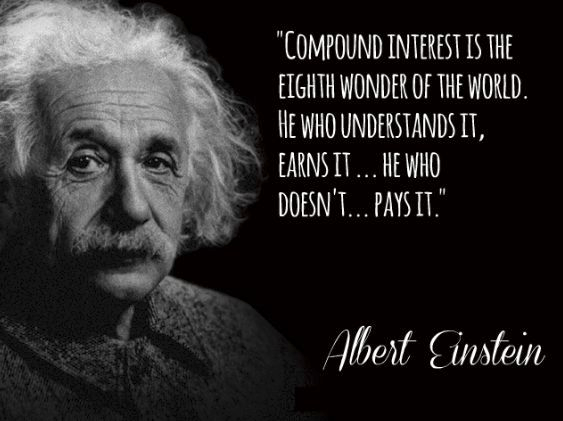
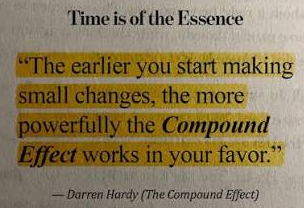
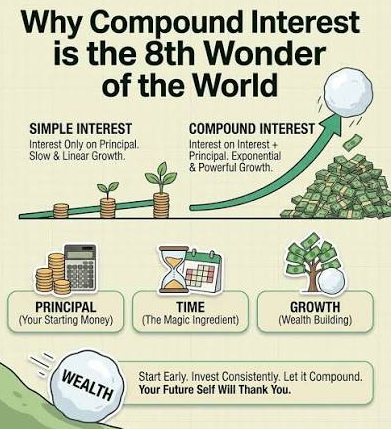
Silicon Valley entrepreneur Sam Altman famously encapsulated this modern shift by advising people to "compound yourself" because exponential growth curves are where the most monumental career and business trajectories happen. ▶ Watch the video on Compounding effect by Darren hardy ▶ Watch the video compound effect "Most people quit right before the progress shows up" Compound interest is the 8th wonder of the world. The Power of Small Wins "Compound interest is the eight wonder of the world. he who understands it, earns it...He who doesn't... pays it" ( Albert Einstein ) ⇒Click on link to Compounding effect
The compounding effect in business is the phenomenon where small, consistent improvements and reinvestments build upon one another to generate exponential long-term growth and competitive advantages. While most commonly associated with financial interest, compounding in a business context serves as the underlying engine for operational efficiency, brand loyalty, talent capability, and strategic scale
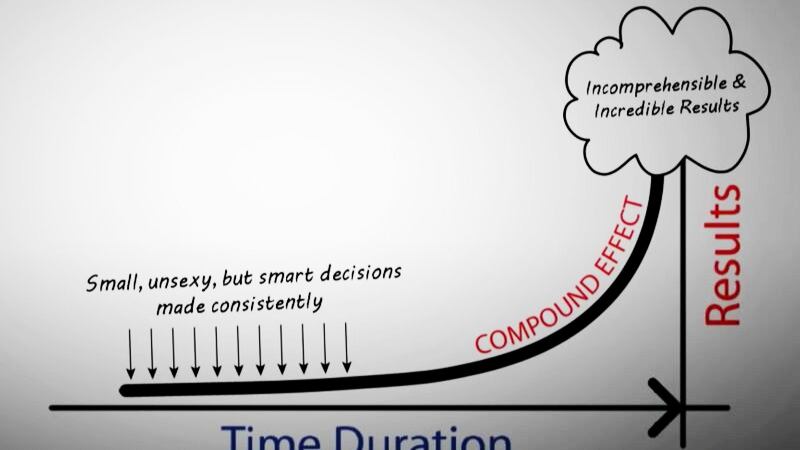
Compounding behaves like a flywheel: agonizingly slow at first, but virtually unstoppable once it gains momentum. It operates across two primary domains in modern business:
1. Operational & Systemic Compounding (The Daily Disciplines)
As James Clear noted in Atomic Habits, you don't rise to the level of your goals; you fall to the level of your systems. In business operations, minor 1% daily changes accumulate exponentially:
The Follow-Up Flywheel: A sales representative who commits to sending just three personalized client follow-ups every single day will build a massive, compounding pipeline of referrals and conversions over a few years that a massive, one-time marketing blitz could never match.
Retained Earnings Isolation: On the corporate finance side, consistently funneling profits back into working capital builds an operational safety net. This eliminates cash flow problems, cuts down the need for expensive debt, and lets the business buy out struggling competitors cheaply during economic downturns.
2. Financial Compounding (The Long-Term Capital Engine)
Financially, compounding remains the ultimate wealth generator. When a business reinvests its dividends and interest back into its core engine, it creates a "snowball effect"
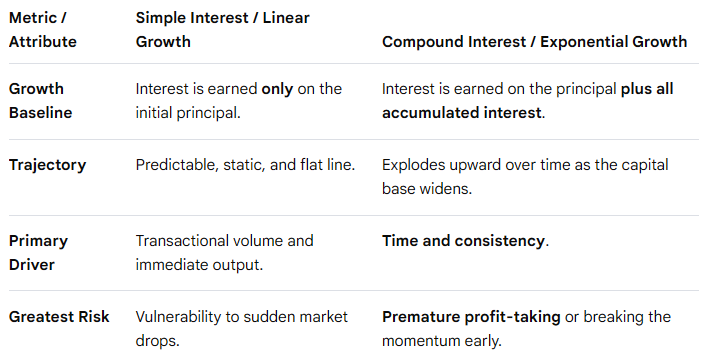
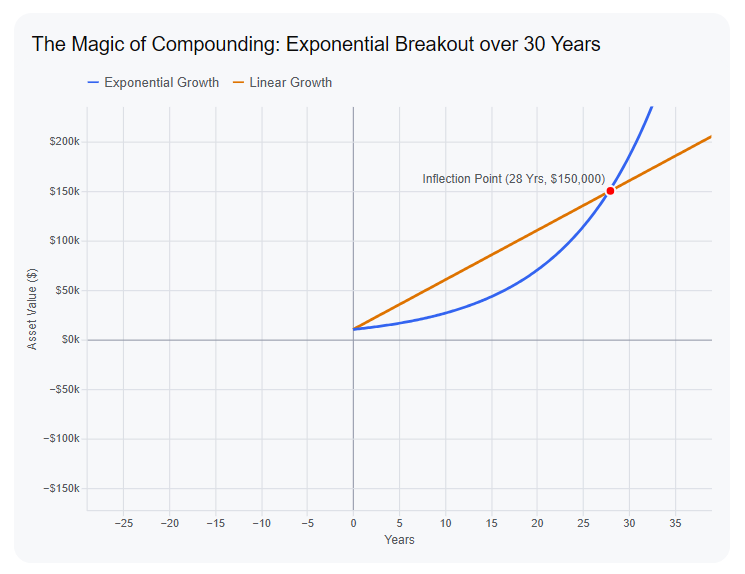
To understand why compounding feels like "magic," you have to visualize the timeline. Linear growth looks reliable early on, but exponential compounding completely detaches itself from standard projections after the "inflection point."
⚠️ The Risk of "Negative Compounding Compounding is a double-edged sword. Just as positive habits and retained earnings build an empire, negative habits and bad financial terms compound downward.
Operational Drag: Missing small quality checks, letting tiny customer service glitches slide, or tolerating minor cultural toxicity may seem harmless day-to-day. Over time, they compound into massive customer churn and brand destruction.
The Debt Snowball: Carrying high-interest corporate debt behaves exactly like anti-compound interest, quickly draining cash reserves and driving a company toward insolvency.
In a corporate or entrepreneurial environment, compounding manifests through five primary self-reinforcing loops:
Operational Systems: Improving workflows or decreasing friction by just 1% each week results in an organization functioning at a fundamentally higher level by year-end. Small process optimizations eliminate waste, decrease costs, and free up capital.
Data Flywheels: Gathering and analyzing data enhances product quality and customer experience. Better products attract more users, who in turn generate more data, expanding the gap between the business and its competitors.
Brand Reputation: Every positive interaction, content asset, or customer service touchpoint builds trust. Over time, delighted customers transform into organic marketers, compounding brand equity and driving down customer acquisition costs.
Talent and Learning: Continuous investment in employee development yields a highly capable, autonomous workforce. This collective intelligence drives faster innovation and reduces costly turnover.
Financial Reinvestment: Retaining earnings and systematically reinvesting capital into growth initiatives (rather than taking premature distributions) exponentially expands financial reserves and organizational resilience over a multi-year



Comments (0)
No comments yet. Be the first to share your thoughts.