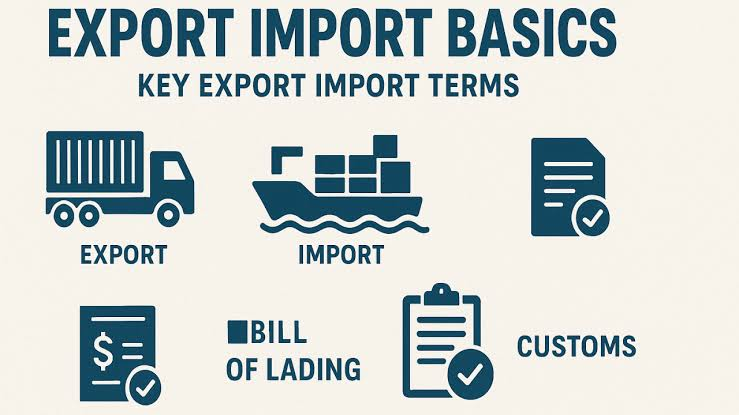
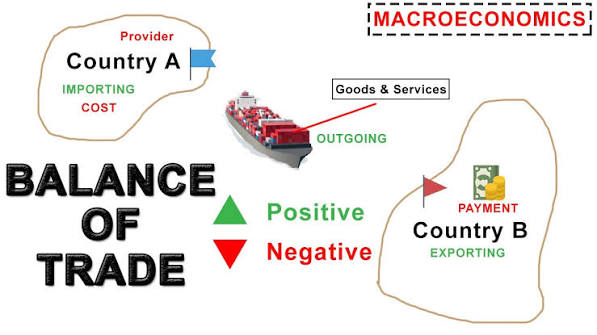
Exports are goods and services produced domestically and sold to buyers in other countries, causing an influx of funds. Imports are foreign-made goods and services purchased by domestic residents or businesses, causing an outflow of funds.
⇒click on link for article on import and export Ethan Zuckerman: “Creativity is an import-export business.” Milton Friedman: “The gain from foreign trade is what we import. What we export is a cost of getting those imports. And the proper objective for a nation as Adam Smith put it, is to arrange things so that we get as large a volume of imports as possible, for as small a volume of exports as possible.” Paul Bamikole: “Excess consumption over production and imports over exports risks national self-destruction.” trade balance
Economic Impacts
Imports: Give consumers lower prices and wider choices, satisfy missing local resources, but can increase domestic competition or cause job losses in local industries.
Exports: Increase factory output and employment, drive economic growth, and bring foreign currency into the nation, though they face barriers like tariffs and shipping costs.
Core Concepts
Comparative Advantage: Countries export goods they can produce at a lower opportunity cost than others, and import goods where the rest of the world has the comparative advantage.
World Price vs. Autarky Price: If the world price is higher than a country's internal (autarky) price, the country becomes an exporter. If the world price is lower, the country becomes an importer.
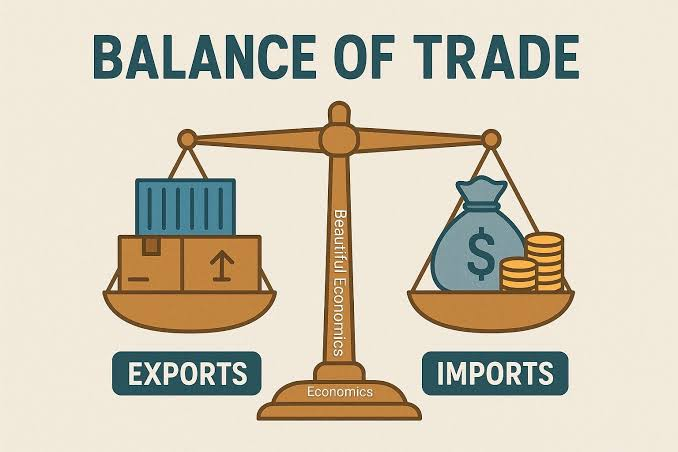
Net Exports (X - M): Total exports (X) minus total imports (M).
Trade Surplus: Exports exceed imports (X > M), adding to GDP growth.
Trade Deficit: Imports exceed exports (X < M), which can reflect strong domestic consumption or devalue the local currency.
International trade is primarily driven by two core economic principles:
Absolute Advantage: A country can produce a good more efficiently (using fewer resources) than another country.
Comparative Advantage: A country can produce a good at a lower opportunity cost than another country. Even if one nation is better at producing everything, both nations still benefit from specializing in what they make relatively most efficiently and trading.
Economic Growth: High export levels can boost domestic employment and production, injecting foreign capital directly into the economy.
Consumer Choice & Price: Imports introduce variety into the local market and drive down prices through global competition.
Currency Fluctuations: Strong export demand typically strengthens a country's currency because foreign buyers must purchase local currency to pay for goods. Conversely, heavy importing increases the supply of local currency on the foreign exchange market, potentially weakening it

Comments (0)
No comments yet. Be the first to share your thoughts.