Shareholders and stakeholders represent two distinct yet overlapping groups in economics and corporate governance. All shareholders are stakeholders, but not all stakeholders are shareholders.
Definition: Individuals or entities that own at least one share of equity in a company.
Core Focus: Maximizing short-term or long-term financial returns, stock price growth, and dividends.
Rights & Status:
Hold legal voting rights (for common stock) and claims on company assets.
Rank last (residual claimants) if the company goes through bankruptcy liquidation.
Theory: Rooted in the Shareholder Theory (championed by Milton Friedman), which asserts a company's primary duty is to maximize profits for its owners.
Stakeholders (Broader Community/Parties)
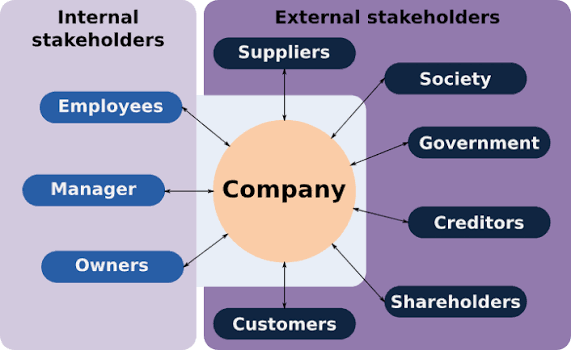
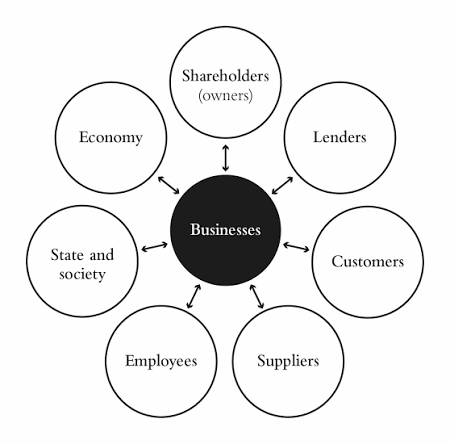
Definition: Any individual, group, or entity affected by or capable of affecting a company's operations and success.
Who They Are:
Internal: Employees, managers, executives.
External: Customers, suppliers, local communities, regulators, the environment.
Core Focus: Long-term business survival, job stability, product quality, ethical practices, and social/environmental impact.
Rights & Status:
Often protected via contracts, labor laws, or community ties rather than equity ownership.
Some groups (like debt-holders or trade creditors) may rank higher than others
In modern economics and corporate governance, every shareholder is automatically a stakeholder, but not every stakeholder holds shares in the company.
Core Differences
Shareholders: Equity owners who hold voting or preferred stock, rank last in bankruptcy liquidation, and measure value through financial metrics like earnings per share and market capitalization.
Stakeholders: A broader group including internal and external parties (workers, buyers, vendors, society) who care about long-term viability, ethical practices, and social welfare.
Shareholder Theory: Associated with Milton Friedman and classical economic views, arguing that a firm's primary duty is to maximize legal, non-deceptive profits for its owners.
Stakeholder Theory: Rooted in R. Edward Freeman's framework, arguing that long-term business success and sustainability rely on harmonizing the needs of all contributing groups rather than treating profit as the sole goal.
Core Principle: The primary purpose of a corporation is to maximize wealth for its owners (the shareholders).
Key Figure: Popularized heavily by economist Milton Friedman in 1970, who argued that "the social responsibility of business is to increase its profits."
Focus: Short- to medium-term financial performance, stock price appreciation, and dividend payouts.
Rationale: Shareholders take financial risks by investing capital, so the executive management acts as their agent to deliver financial returns.
👥 Stakeholder Value (Stakeholder Capitalism)
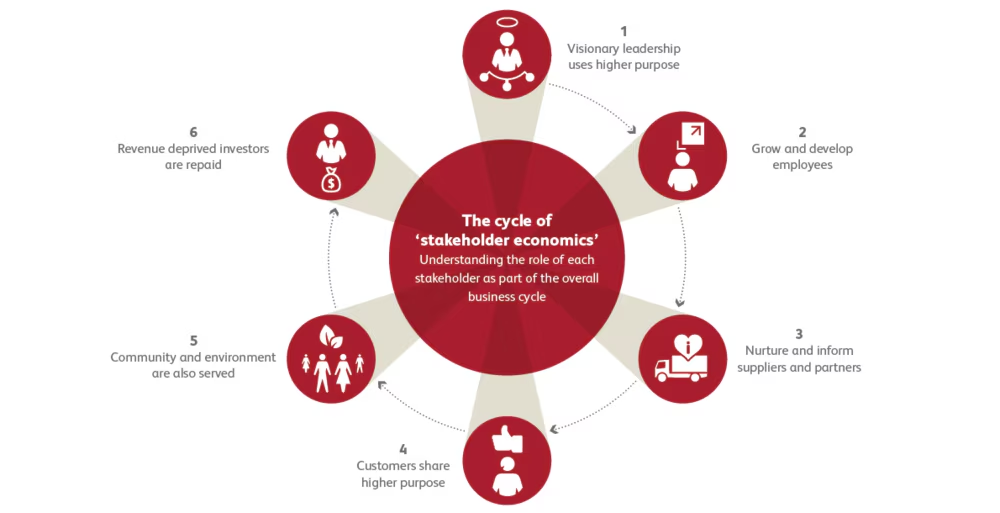
Core Principle: A corporation should create value for everyone who has a stake in or is affected by the company's operations.
Key Figure: Pioneered by R. Edward Freeman in 1984.
Who are the stakeholders? Employees, customers, suppliers, local communities, creditors, and the environment, alongside shareholders.
Rationale: A business cannot succeed long-term without the support of its workers, loyal customers, and stable communities. Therefore, financial return is an outcome of doing good business, not the sole purpose.

Comments (0)
No comments yet. Be the first to share your thoughts.