Frank Sinatra: “Orange is the happiest color" , Remez Sasson: “Orange is the color of positive thinking and optimism.” ▶ Watch the video on orange harvesting
Orange farming requires well-drained soil, warm tropical or subtropical climates, and grafted saplings for steady and high-quality fruit production. ORANGES Orange farming is a highly lucrative agricultural industry that thrives in warm, subtropical climates. Successful cultivation relies on grafted trees on healthy rootstocks, which ensures rapid establishment, uniform fruit quality, and strong disease resistance compared to growing from seeds. A mature, well-managed orchard can remain highly productive for up to 40 years, yielding an average of 200 to 400 oranges per tree each season.
Key Steps in Orange Farming
Climate & Soil: Choose a site with full sunlight and loose, sandy loam or well-drained soil with a pH between 5.5 and 6.5.
Propagation: Use grafted trees rather than seeds to ensure fast growth, strong disease resistance, and reliable fruit quality.
Spacing & Planting: Space trees 3 to 6 meters apart to allow good sunlight and air circulation.
Watering: Install drip irrigation to keep the root zone moist without overwatering or wetting the foliage.
Fertilization: Feed young trees with nitrogen-rich fertilizers and switch to balanced N:P:K formulas with micronutrients (like zinc and boron) for fruiting trees.
Pruning & Maintenance: Remove weak, damaged, or overcrowded branches regularly to shape the canopy and improve airflow.
Pest Control: Manage common pests like aphids, mites, and citrus canker using integrated pest management or neem oil.
Harvesting: Pick fruit when it is bright, firm, and fully ripe, typically 6 to 12 months after flowering depending on the variety.
Starting a lucrative orange farming business in Nigeria requires transforming a long-term agricultural project into a commercial goldmine by leveraging grafted seedlings, smart irrigation, and structured market positioning. Because oranges are rich in Vitamin C and have constant industrial and local retail demand, a well-managed orchard can provide a stable, compounding income stream for decades. THE HAPPIEST COLOUR The Sourcing Golden Rule:Never plant raw orange seeds if you are running a commercial business. Seeds take 8 to 13 years to bear fruit and often yields erratic quality. Instead, source certified, grafted seedlings from verified agricultural institutes or certified private nurseries. Grafted trees reach commercial fruiting status in just 2 to 3 years.
Execution & Field Management
Execution determines tree structural strength and spatial efficiency.
Optimal Spacing Strategy: Plant your trees using a 5m x 5m up to 7m x 7m spacing grid. This allows enough room for maintenance, optimizes air circulation to lower fungal disease risk, and ensures branches do not block out adjacent sunlight as they mature.
Perfect Timing: Transplant your nursery-bought grafted saplings early in the rainy season (April to June). This gives the root systems natural moisture to establish firmly before confronting their first dry season.
Dry Season Irrigation: When the rains stop, setup a low-cost drip irrigation system. For small farms on a tight budget, place water bottles with tiny pierced holes right at the base of young tree root zones to conserve water while maintaining necessary soil moisture.
Three-Tier Nutrient Application:
Years 1 & 2: Feed young trees with high-nitrogen NPK fertilizer to push rapid vegetative growth.
Year 3: Apply urea to boost leaf structure and branches.
Year 4 Onward (Fruiting stage): Transition to phosphate-rich blends and organic compost to stimulate fruit set, density, and size.
Operational Risk Mitigation
Managing an orange farm means knowing how to spot mistakes that mimic organic growth but drain profits.
The "Lemon Turn" Pruning Trap: If you use hired farm labor, closely supervise them. If workers prune incorrectly and accidentally cut off the top grafted section of the tree, the base rootstock (often rugged wild lemon or sour orange) will grow back instead. Your tree will start producing sour lemons instead of sweet oranges.
Pest and Disease Scouting: Actively monitor for Citrus Greening Disease (HLB)—which causes unseasonal yellow leaves and small, misshapen green fruits—and control sap-sucking insects early. Apply neem oil sprays or safe target insecticides at the first sign of leaf miners or aphids
1. Soil and Climate Setup
Sunlight & Climate: Oranges require full sunlight and moderate, warm temperatures.
Soil Type: They thrive best in light, loose, well-drained soils. Compaction hinders root penetration, so deep plowing is heavily recommended before planting.
pH Requirements: The optimal soil pH range sits strictly between 5.5 and 6.5 (up to 7.0 is tolerable). Lime or organic amendments should be used if the soil is too acidic.
2. Planting and Spacing
Standard Spacing: Trees are typically planted in straight rows spaced 6 meters by 6 meters apart. This yields roughly 278 trees per hectare and allows proper airflow, sunlight penetration, and mechanized access.
High-Density Option: For quicker initial returns, growers sometimes opt for 4 meters by 4 meters configurations using dwarf rootstocks.
Method: Dig a spacious hole (e.g., 3x2 feet), blend in organic manure to establish beneficial microorganisms, place the grafted seedling upright, and mulch the base immediately to lock in moisture. Planting at the onset of a rainy season reduces early irrigation dependency.
3. Orchard Management & Care
Watering: While mature trees tolerate moderate dry spells, consistent water is absolutely critical during flowering and fruit development. Drip irrigation is the gold standard because it feeds the root zone directly, cutting down on evaporation and keeping moisture off the leaves to prevent fungal growth.
Nutrient Management: Young trees need heavy nitrogen-rich fertilizers (like CAN or urea) to build up foliage. Mature trees require a balanced NPK application. Spraying foliar micronutrients like zinc and boron during flowering drastically improves the fruit set.
Pruning: Regularly prune the canopy to eliminate dead, diseased, or overlapping branches. This improves light distribution throughout the tree, leading to sweeter and larger fruits.
4. Harvesting & Processing
Timeline: Oranges take roughly 6 to 9 months to ripen after the flowers fade. The primary harvesting window spans from November to May.
Fresh Market vs. Juicing:
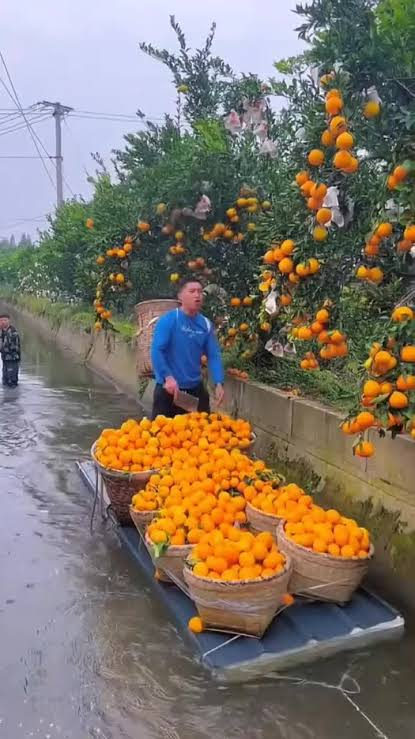
Handpicking is the mandatory traditional standard for the fresh fruit market to protect the peel and stem from damage. A skilled worker can pick 3,000 to 4,000 pounds a day.
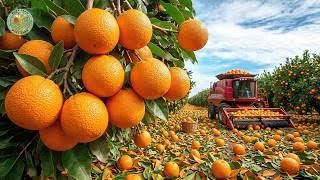
Vibratory Harvesters (shaking machines) are deployed on massive industrial juice farms, capable of harvesting a tree in just 8 seconds and clearing up to 450 tons of fruit daily.
Post-Harvest: Fruit is sent to processing facilities to be washed, polished, and sorted. Flawless oranges are boxed for retail, while smaller or cosmetically imperfect fruits are instantly rerouted for pressing into juice, essential oils, or livestock feed.

Comments (0)
No comments yet. Be the first to share your thoughts.