The production of the most common commercial bleaching agent—sodium hypochlorite (NaClO)—depends on whether it is manufactured in a heavy industrial chemical plant or mixed using a simplified local batch method.
A bleaching agent is a chemical substance that whitens or lightens materials by chemically destroying or modifying colored organic pigments
On a mass scale, manufacturers like Clorox rely on electrolysis to create the raw materials from scratch.
Step 1: Electrolysis: High-purity industrial salt water (brine) is subjected to a strong direct electrical current. This splits the sodium chloride molecules apart, yielding liquid chlorine gas (Cl₂) and sodium hydroxide (NaOH, or caustic soda).
Step 2: The Chemical Reaction: The chlorine gas is bubbled directly into a chilled solution of sodium hydroxide.
The Formula: Cl₂ + 2NaOH → NaClO + NaCl + H₂O
Step 3: Dilution & Stabilization: This reaction creates a highly concentrated, corrosive form of bleach. To make it safe for consumer use, it is heavily diluted with water until the active sodium hypochlorite concentration reaches 5% to 6% (or up to 10–15% for heavy-duty industrial pool sanitizers).
2. The Local/Small-Scale Process
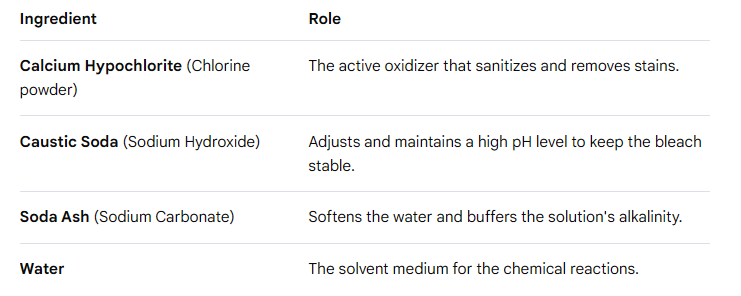
Because chlorine gas is highly toxic and difficult to transport safely, local small businesses and DIY crafters use a double-displacement chemical method using pre-stabilized dry powders:
Dissolving base components: Caustic soda is dissolved in water (which triggers an exothermic reaction, making the water hot), followed by the soda ash.
Adding the chlorine source: Calcium hypochlorite powder is mixed thoroughly into the liquid.
The Curing Phase: The mixture is sealed and left to sit for 24 to 48 hours. During this window, the calcium binds with the carbonates to form an insoluble chalky sediment (calcium carbonate) at the bottom.
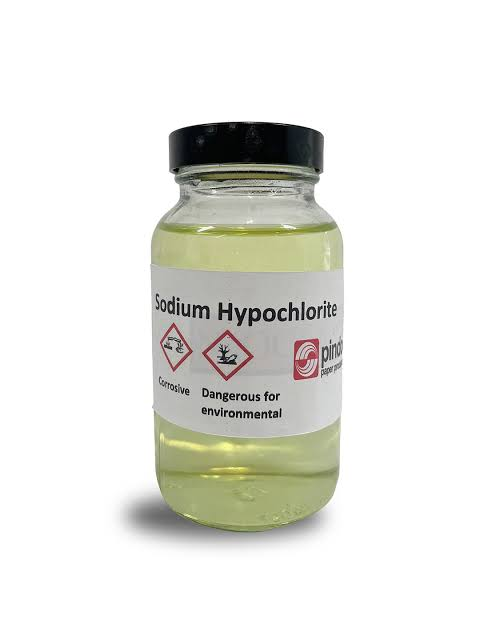
Filtration: The clear, amber-tinted liquid on top is carefully scooped out or siphoned through a fine filter cloth. This clear byproduct is standard liquid household bleach.
Common Uses
Laundry: Whiten clothes, remove stubborn stains, and sanitize fabrics.
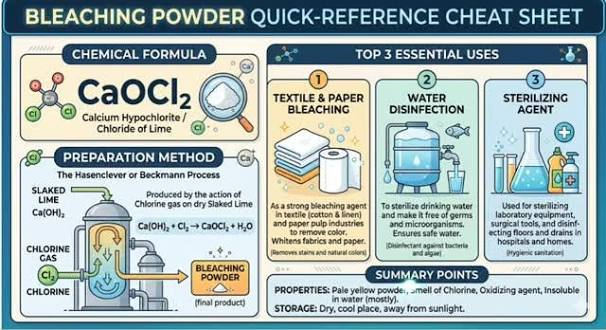
Industry: Bleach wood pulp in the paper industry and treat fibers in textile manufacturing.
Disinfection: Sanitize drinking water, swimming pools, and hard surfaces in hospitals.
Comments (0)
No comments yet. Be the first to share your thoughts.
Comments (0)
No comments yet. Be the first to share your thoughts.