At its core, butter is made by forcefully agitating cream until its fat molecules clump together into a solid mass, separating entirely from the liquid buttermilk. While the basic science remains identical whether you make it in a factory or shake it in a mason jar at home, the scale and precision of commercial manufacturing involve a highly regulated multi-step process ▶ Watch the video on Butter making Butter process 🏭 The Factory Process: Mass Production
Modern dairy plants process thousands of liters of milk a day using automated, hygienic equipment.
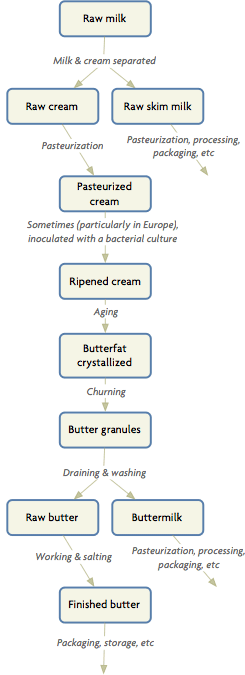
1. Milk Collection & Testing: Fresh cow's milk is collected from dairy farms via insulated tanker trucks. At the factory, it is tested for quality, fat content, and purity.
2. Separation (Centrifugation): The whole milk is fed into a high-speed centrifuge called a cream separator. This spins the milk rapidly, cleanly separating the lighter, fat-rich cream from the heavier skim milk.
3. Pasteurization: The raw cream is heated to high temperatures (typically between 65°C and 95°C) for a short period to kill harmful bacteria and extend shelf life, then rapidly cooled.
4. Maturation (Aging): The cream is held in cool tanks for 12 to 24 hours to let the fat crystals stabilize. (Note: For cultured butter, specific lactic acid bacteria are added during this phase to ferment the cream and create a richer, tangier flavor).
5. Industrial Churning: The matured cream is pumped into massive mechanical churns that rotate rapidly. The violent agitation breaks down the protective membranes around the milk fat. Within 20 to 30 minutes, the fat molecules smash into one another and stick together, forming small, yellow chunks called "popcorn butter". 6. Draining & Washing: The remaining liquid, known as buttermilk, is drained out to be used in baking or ice cream manufacturing. The solid butter grains are thoroughly washed with ice-cold water to remove any leftover buttermilk, which prevents the butter from spoiling quickly. 7. Kneading & Salting: Huge mechanical paddles knead the butter into a perfectly smooth, uniform paste. During this phase, precise amounts of salt (usually 1.5% to 2%) or other flavorings are blended in. 8. Shaping & Packaging: Extruders squeeze the smooth butter into blocks, sticks, or tubs. Automated lines wrap stick butter in foil or wax paper to block out light and oxygen, which could cause it to go rancid.
You can easily replicate this entire scientific process at home with minimal equipment.
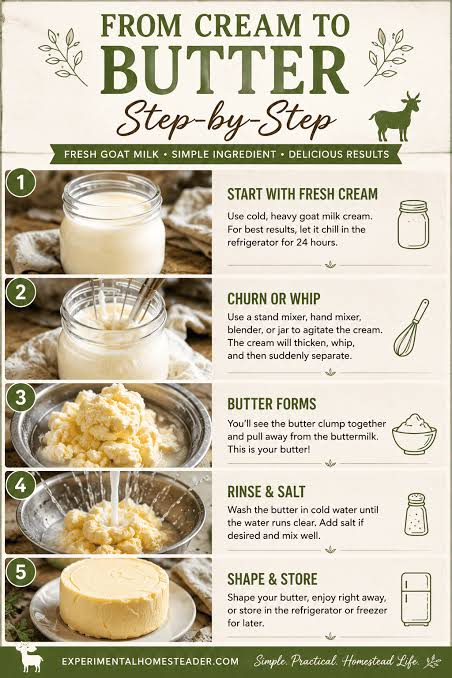
The Ingredient: All you need is high-quality heavy whipping cream (which sits at about 35% to 40% fat).
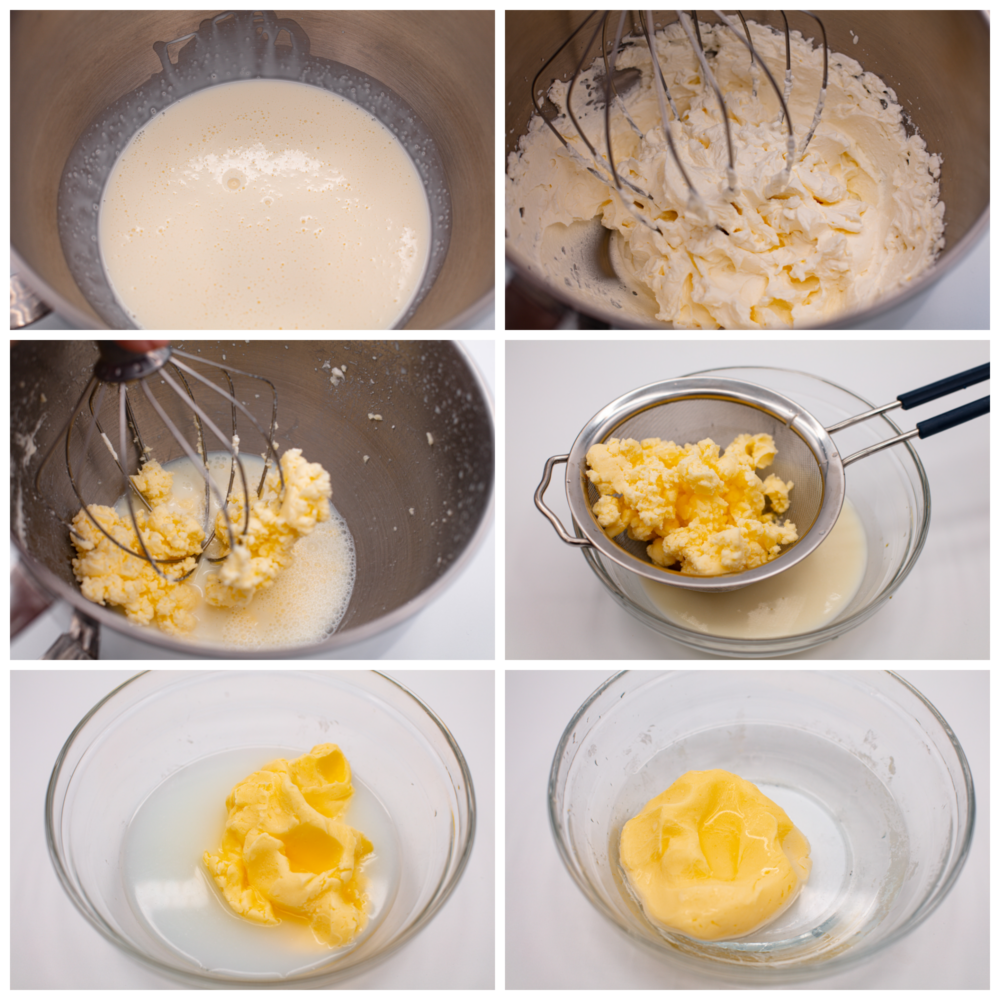
The Agitation: Pour the cream into a food processor, a stand mixer with a whisk attachment, or simply a mason jar with a tight lid.
The Stages:
After 2–3 minutes: The cream traps air and forms stable peaks (whipped cream).
After 5–8 minutes: Continued mixing over-whips the cream. The texture becomes grainy, collapses, and suddenly separates into pale yellow solid clumps and a watery liquid.
The Finish: Strain out the liquid buttermilk. Submerge the solid butter ball into a bowl of ice water and press it firmly with your hands or a spatula to squeeze out any remaining trapped buttermilk. Fold in a pinch of sea salt if desired, shape it, and refrigerate.
Comments (0)
No comments yet. Be the first to share your thoughts.