Sorting and Cleaning: Pick out bad seeds, rocks, and debris from raw peanuts.
Roasting (Frying): Toast the peanuts on low-to-medium heat in a pan until the skins crack and loosen.
Peeling (Winnowing): Remove the husks by hand, or by gently pounding them in a mortar and blowing away the chaff.
Grinding: Blend or mill the cleaned peanuts into a smooth, creamy paste.
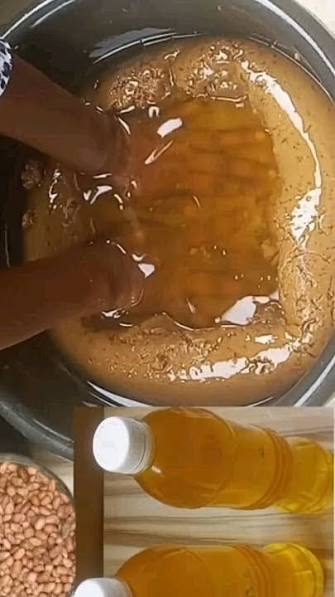
Kneading and Extracting: Add small amounts of water gradually while mashing or kneading the paste with your hands. The mechanical agitation breaks the emulsion, causing the pure oil to separate and rise to the top.
Scooping and Purifying: Scoop the extracted oil out and heat it gently with a little water to cook off moisture, eliminate impurities, and prevent spoilage. Strain the final clear oil. (The leftover solid paste can be fried to make delicious snacks like kuli-kuli or groundnut cake).
Modern manufacturing combining mechanical precision and high-efficiency filtration involves several highly automated steps:
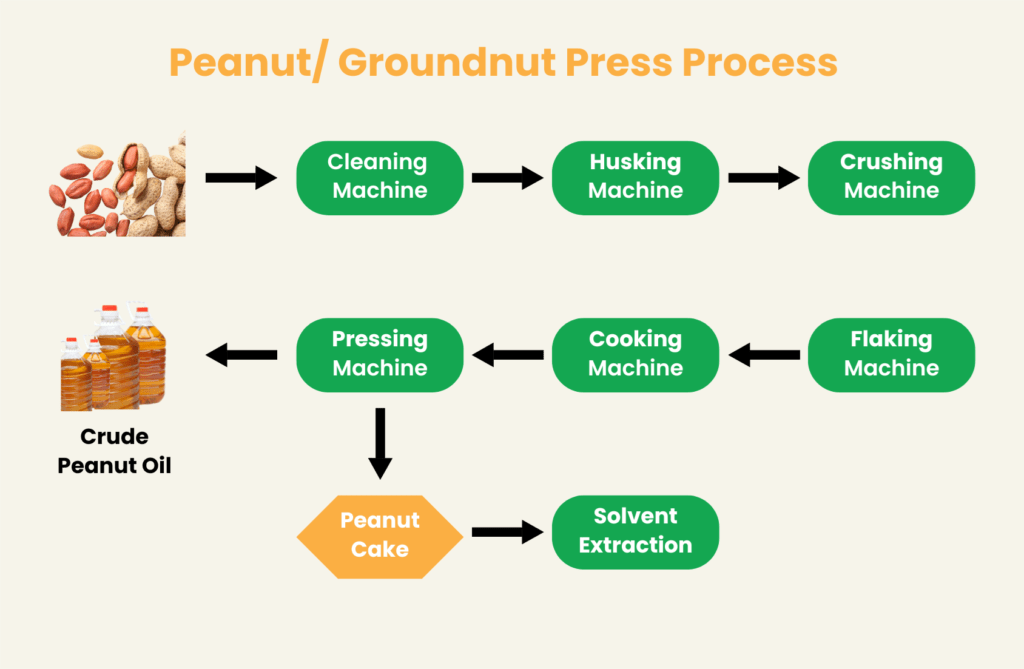
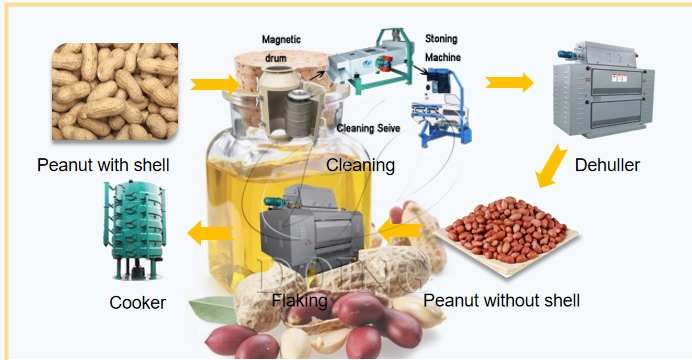
Cleaning & Dehulling: Harvested groundnuts are fed into vibrating cleaning machines to sift out dirt, stones, and weed seeds. They then pass through a shelling machine (decorticator) that cracks open the hard outer husks and separates the clean inner kernels.
Roasting & Cooking: The raw kernels are roasted at around 60°C for 15 to 20 minutes. This breaks down the cellular structure of the nut, reducing moisture and significantly increasing the oil yield while giving the oil a pleasant aroma.
Mechanical Pressing: The roasted nuts are fed into a heavy industrial screw press or expeller. High pressure and friction-generated heat (ranging from 60°C to 99°C) squeeze out the crude oil.
Double-Pressing: The first press extracts about 85% of the oil. The remaining solid "cake" byproduct still holds about 14% oil, so it is sent to a secondary press or processed via solvent extraction to pull out every last drop. The dry, leftover cake is sold as high-protein animal feed.
Filtration & Purity: The raw crude oil is pushed through multi-stage commercial filters—often utilizing fine, natural cotton mesh without added chemicals—to strip out fine sediment, leaving the oil clear, golden, and ready for automated bottling.
Comments (0)
No comments yet. Be the first to share your thoughts.