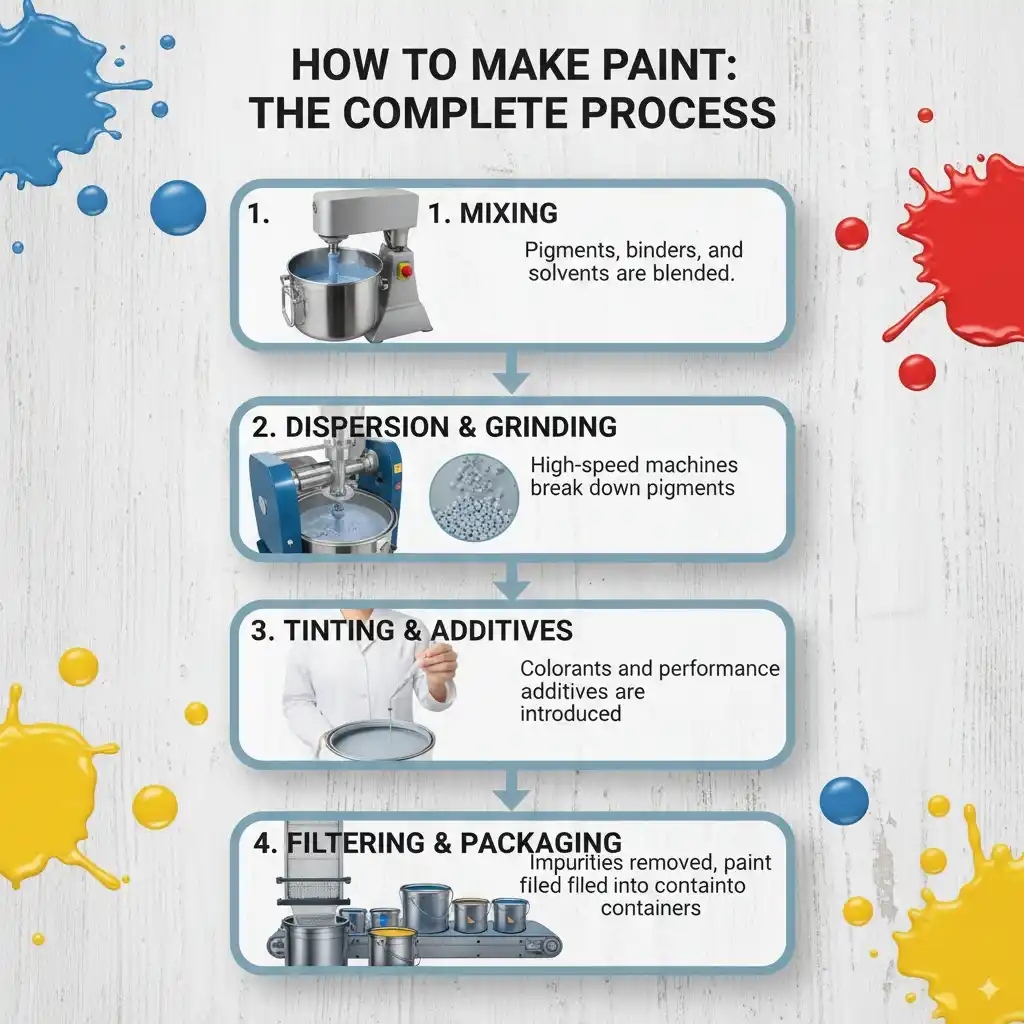
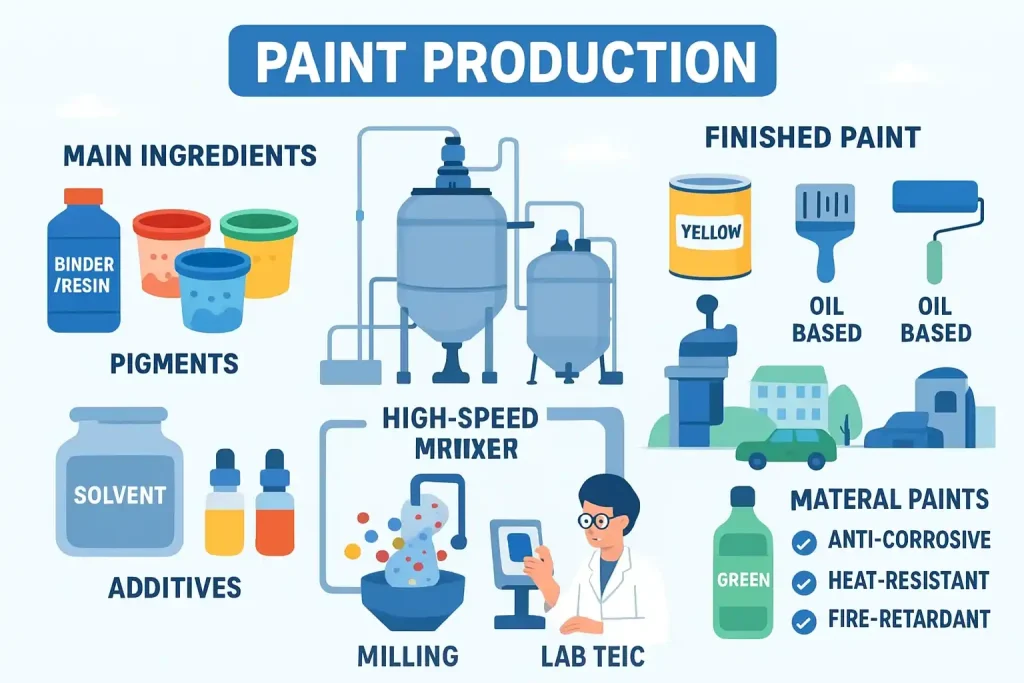
1. Measuring Raw Materials: Workers or automated systems precisely weigh and measure out the pigments, binders, solvents, and additives.
2. Mixing and Dispersing: Dry pigments are blended with solvents and initial liquid ingredients in high-speed industrial vats to create a thick paste or slurry.
3. Grinding and Milling: The mixture passes through bead, ball, or roller mills to break down any pigment clumps and refine particle sizes to ensure a smooth texture. To achieve a perfectly smooth texture that won't leave streaks on a wall, the slurry must be refined. The thick mixture is pumped into a mill—often a bead mill, ball mill, or triple roll mill. The mill uses heavy rollers or tiny, fast-moving ceramic beads to crush the pigment particles down to a microscopic size (often less than 5 microns). This ensures maximum color brightness and full ingredient integration
4. Let-Down (Blending): Remaining binders, solvents, and specific performance additives are mixed into giant tanks to homogenize the final formulation.
5. Quality Control: Technicians test each batch for viscosity, color accuracy, drying time, durability, and pH balance.
6. Packaging: Automated machines fill, seal, and label containers for distribution.
Before any paint leaves the blending tanks, laboratory technicians pull samples to run a battery of strict tests. They use specialized equipment to verify:
Viscosity: Ensuring the paint is neither too watery nor too thick.
Color Accuracy: Using a spectrophotometer to confirm the color matches the target shade exactly.
Application Quality: Brushing the paint onto test boards to look for imperfections like grit, foam, or poor hiding power.
Automated Packaging
Once approved, the paint is pumped to an automated filling line. High-speed robotic machines drop empty cans onto a conveyor belt, fill them to a precise weight, stamp the lids into place, and apply the product labels. The cans are packed onto pallets, wrapped in plastic, and shipped out to retail stores.
Comments (0)
No comments yet. Be the first to share your thoughts.
Comments (0)
No comments yet. Be the first to share your thoughts.