How It's Made
How it's Made : Sugar
October 9, 2026 · 10 views ·by Odeyemi Oluwafemi
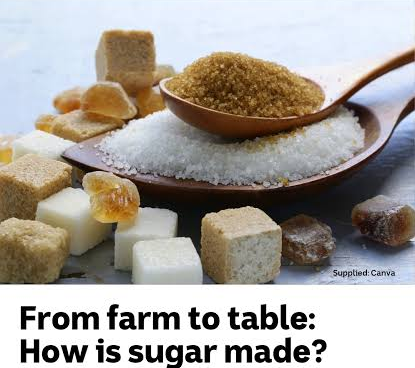
Sugar production transforms natural crops—primarily sugarcane or sugar beets—into the familiar sweet crystals used worldwide through a highly structured industrial process. While sugarcane is a giant grass grown in tropical climates and sugar beets are root crops from temperate zones, both are processed similarly once the initial juice is extracted.
▶ Watch the video , the History of sugar
▶ Watch the video, how Sugar are made in factory
"A spoonful of sugar helps the medicine go down." — Mary Poppins
"A wise woman puts a grain of sugar into everything she says to a man, and takes a grain of salt with everything he says to her." — Helen Rowland
▶ Watch the video , the History of sugar
▶ Watch the video, how Sugar are made in factory
"A spoonful of sugar helps the medicine go down." — Mary Poppins
"A wise woman puts a grain of sugar into everything she says to a man, and takes a grain of salt with everything he says to her." — Helen Rowland
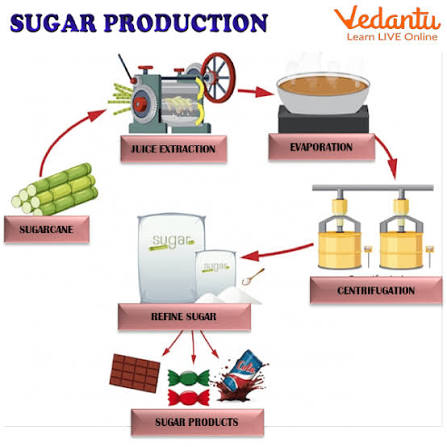
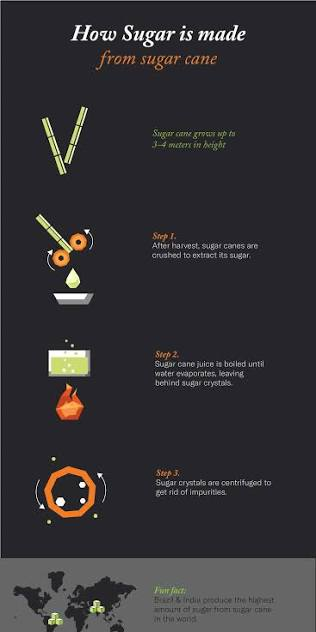
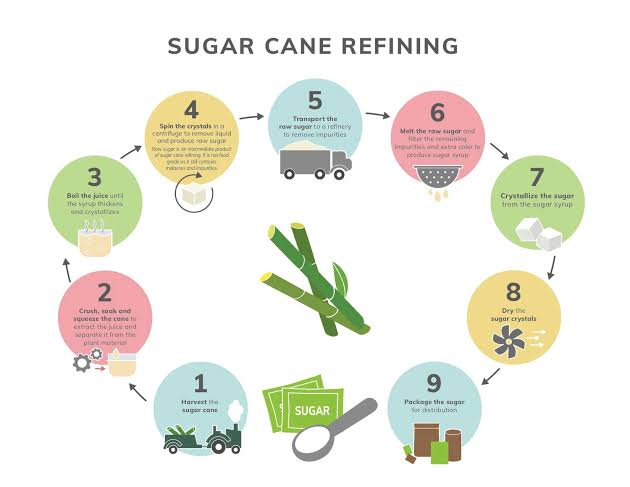
1. Harvesting and Preparation
- Sugarcane: Stalks are harvested mechanically or by hand, chopped into smaller pieces (billets), and transported to the mill.
- Sugar Beets: The roots are lifted from the ground, washed, and sliced into thin, V-shaped strips called cossettes.
2. Juice Extraction
- For Sugarcane: The billets are washed to remove dirt and rocks, then shredded by serrated blades. A series of massive roller mills compress the shredded plant fibers to squeeze out the sugary juice. The remaining dry pulp, called bagasse, is recycled as fuel to power the factory's boilers.
- For Sugar Beets: The sliced cossettes are soaked in tall vessels filled with hot water, pulling the sugar out through a diffusion process.
3. Purification and Clarification
The raw, extracted juice is dark brown and filled with natural impurities like soil and plant fibers.
- Liming: Carbon dioxide and a lime solution (calcium oxide) are added to regulate the pH and act as a coagulant.
- Sulfitation: Sulfur dioxide gas is bubbled through the liquid to bleach it, shifting the color from dark brown to a clearer amber or yellow.
- Separation: The mixture flows into clarifier tanks where heavy impurities settle to the bottom and floating scum is skimmed off the top, leaving a clear, sweet liquid.
4. Evaporation and Concentration
The clarified liquid is still roughly 85% water and 15% sugar. It passes through a series of multi-stage vacuum evaporators where it is boiled down. This process drives off the moisture until the sugar concentration reaches roughly 60% to 65%, turning the juice into a thick, sweet syrup.
5. Crystallization (Seeding)
To turn the thick syrup into actual crystals, it is transferred into specialized vacuum pans. Workers "seed" the boiling syrup by adding a milky suspension of microscopic sucrose crystals dissolved in alcohol. These tiny crystals give the sugar dissolved in the syrup a framework to bond to, rapidly growing into visible sugar crystals suspended in a heavy sludge called massecuite.
6. Centrifugation
6. Centrifugation
The thick massecuite paste is fed into high-speed centrifugal machines spinning at roughly 1,200 revolutions per minute. The extreme centrifugal force forces the liquid byproduct—molasses—out through perforated screens in the spinning basket, while the pure sugar crystals stay trapped inside.
7. Drying and Packaging
The wet, white sugar crystals are washed with a fine mist of water inside the centrifuge and moved to a hot-air rotary dryer. The moisture is drastically reduced to a standard 0.02% humidity level to prevent clumping. Finally, the dry sugar is sorted by grain size using vibrating screens and channeled into automated packaging machines to be bagged for retail stores.
Comments (0)
No comments yet. Be the first to share your thoughts.