Lifestyle
MILLENNIAL VS GEN Z AT WORK
August 15, 2026 · 40 views ·by Emma-Golden
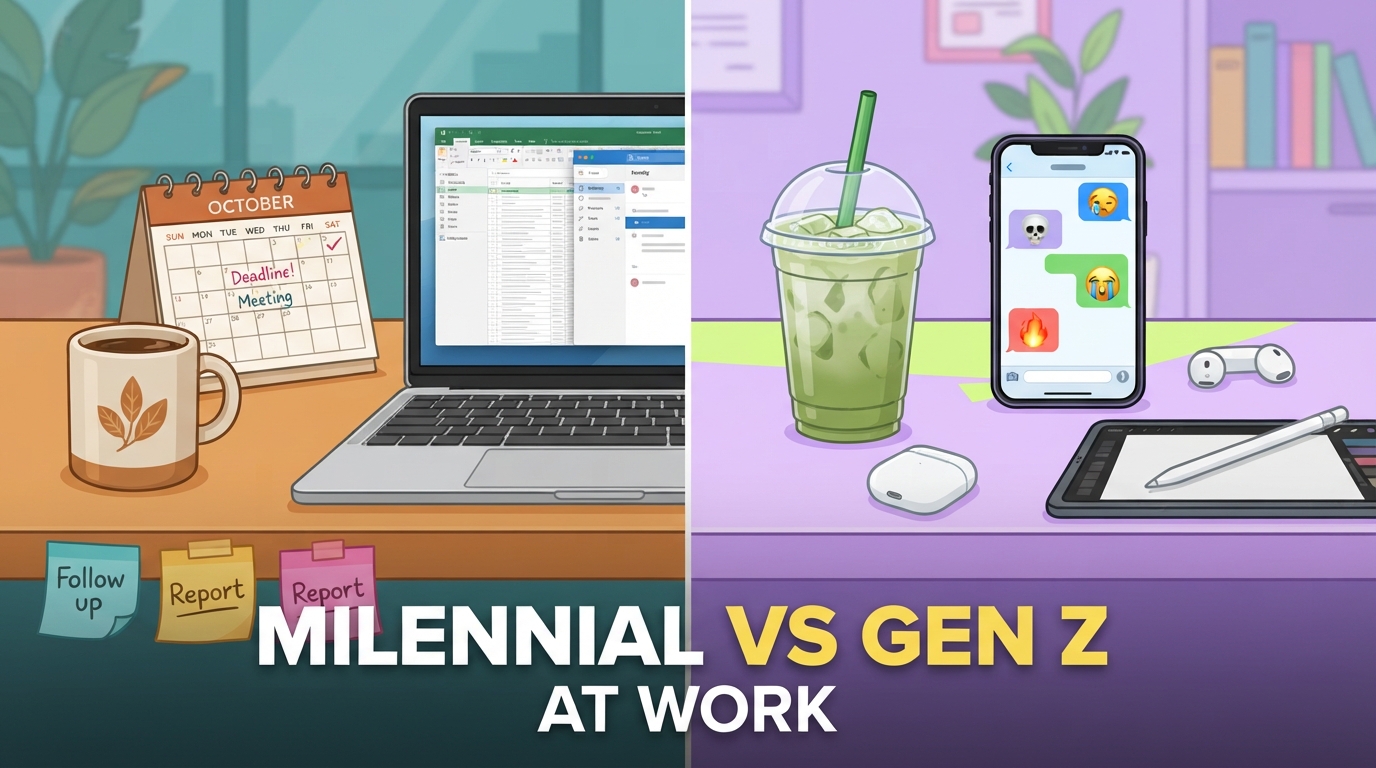
MILLENNIAL VS GEN Z AT WORK
The Generational Clash Over Ambition, Money, Boundaries and Work-Life Balance
Walk into a workplace where Millennials and Gen Z work together and you'll probably find something fascinating.
They're working toward the same company goals.
They may even have the same job title.
But they don't always have the same idea of what a good working life looks like.
One person might say:
“You have to pay your dues.”
Another might ask:
“Why should suffering be part of the job description?”
One values staying with a company for years.
Another sees no problem leaving if the job isn't working for them.
One may see working late as dedication.
Another may see it as a sign that the workload needs fixing.
So who's right?
Perhaps the answer isn't as simple as Millennial vs Gen Z.
These generations entered adulthood under very different circumstances.
And those circumstances shaped how they think about work.
THE MILLENNIAL WORK EXPERIENCE
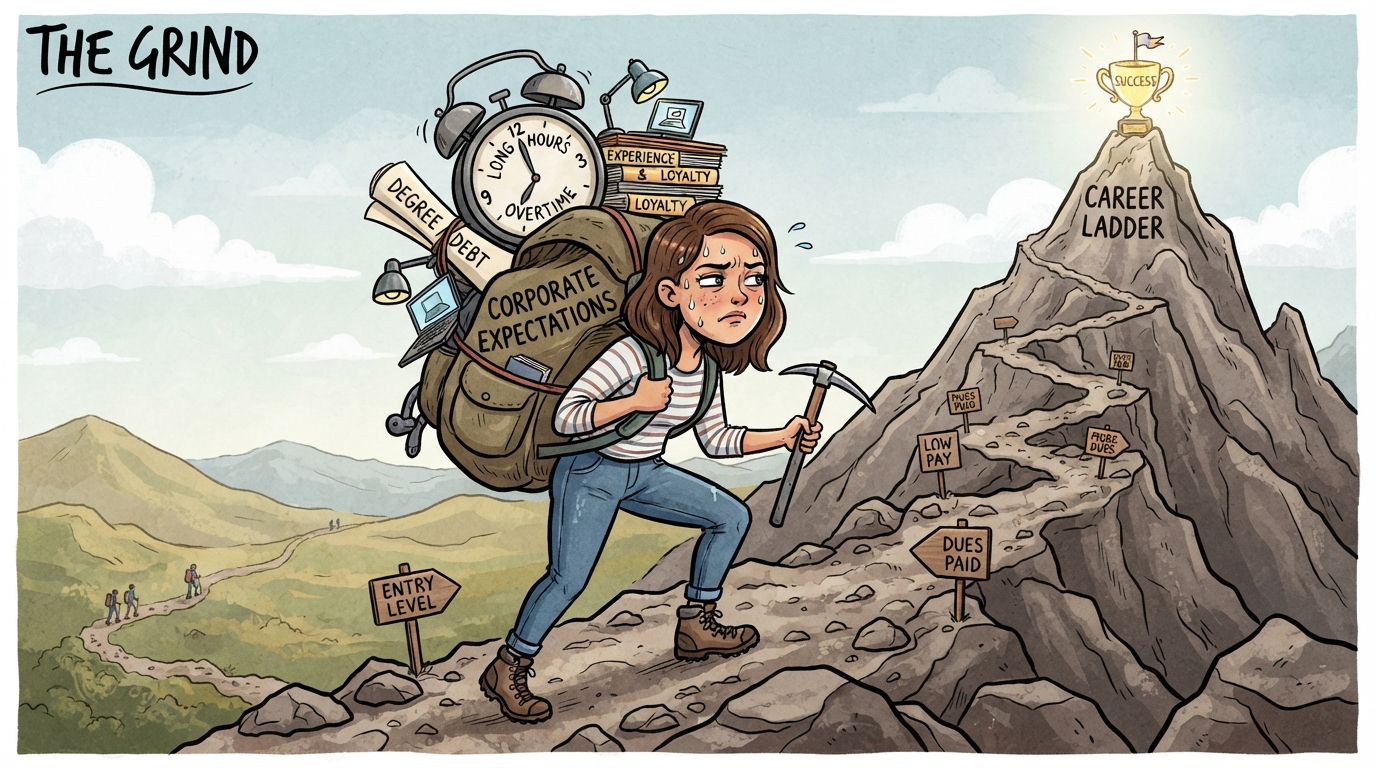
THE GRIND.
Many Millennials were raised around a fairly traditional career formula:
Get educated.
Get a job.
Work hard.
Gain experience.
Climb the ladder.
Stay loyal.
Eventually, you'll be rewarded.
For many, working hard meant making sacrifices.
Long hours.
Commuting.
Taking opportunities that weren't perfect.
Staying in difficult jobs to build experience.
Proving yourself before expecting flexibility.
But then the world of work changed.
Technology accelerated.
Remote work expanded.
Social media created new career paths.
And suddenly, the traditional ladder wasn't the only way up.
THEN GEN Z WALKED INTO THE OFFICE
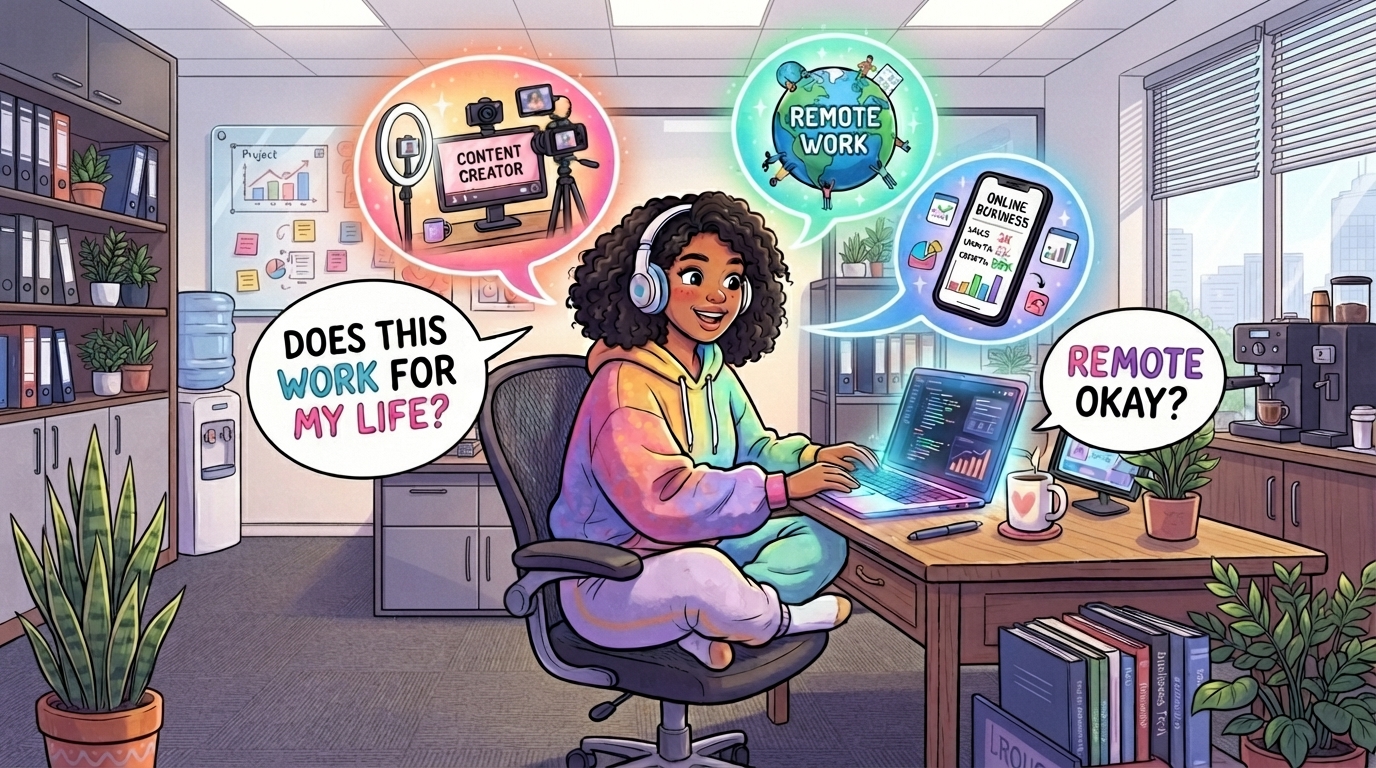
THE SOFT WORK.
Gen Z entered the workplace with a completely different relationship with technology.
For many of them, the internet wasn't something they adapted to.
It was already there.
They saw people turn content creation into careers.
They watched freelancers work from their bedrooms.
They saw entrepreneurs build businesses online.
They saw employees publicly discuss salaries, workplace culture and burnout.
They also watched people leave jobs and openly talk about why.
So naturally, they began asking different questions.
“Does this job actually work for my life?”
“Why do I have to be physically present if the work can be done remotely?”
“What am I actually learning here?”
“Is this salary worth the lifestyle it's costing me?”
Those questions can sound rebellious to one generation and completely reasonable to another.
IS GEN Z LAZY?
This is probably one of the biggest stereotypes surrounding Gen Z workers.
But let's slow down.
Wanting flexibility doesn't automatically mean someone doesn't want to work.
Wanting boundaries doesn't mean someone lacks ambition.
Wanting meaningful work doesn't mean someone refuses to work hard.
At the same time, Gen Z isn't automatically correct about everything either.
A workplace still requires responsibility.
Deadlines still matter.
Skills still need to be developed.
Experience still matters.
And sometimes you have to do difficult things you don't particularly enjoy.
The challenge is finding the difference between healthy boundaries and avoiding responsibility.
THE NEW MEANING OF AMBITION
For a long time, ambition often looked like this:
Big office.
Big title.
Bigger salary.
More responsibility.
More employees.
More prestige.
But ambition doesn't look the same to everyone anymore.
For one person, ambition means becoming CEO.
For another, it means becoming financially independent.
For another, it means building a business.
For another, it means having a stable nine-to-five and enough time for family.
For another, it means working four days a week and spending the rest of the time doing something they love.
The question is no longer simply:
“How far can you climb?”
It's increasingly becoming:
“What kind of life are you trying to build?”
THE FIGHT OVER WORK-LIFE BALANCE
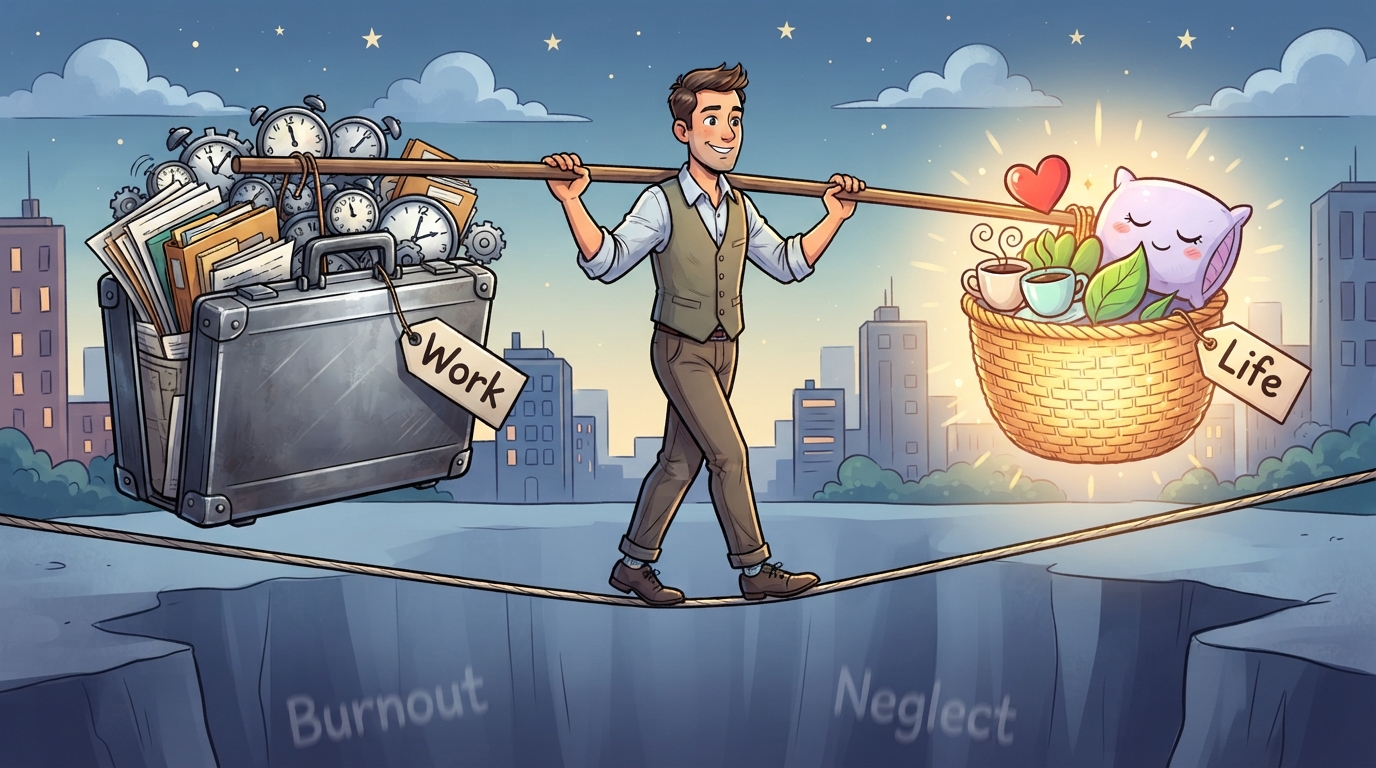
THE BALANCE.
This is where the generational conversation gets particularly interesting.
Older workplace culture often celebrated the employee who stayed late.
The person who answered emails at midnight.
The person who never said no.
The person who was always available.
But younger workers have increasingly questioned whether that should be considered admirable.
Because what happens when the employee goes home?
They still have a life.
Family.
Friends.
Health.
Responsibilities.
Rest.
Interests.
A career is important.
But it is still only one part of a person's life.
WHAT EACH GENERATION CAN LEARN
Maybe Millennials can teach Gen Z something about patience.
Not every opportunity will be exciting.
Sometimes you have to start at the bottom.
Sometimes expertise takes years.
Sometimes you have to work through uncomfortable seasons.
And maybe Gen Z can teach Millennials something too.
You don't have to sacrifice your entire identity for your career.
Flexibility matters.
Wellbeing matters.
Meaning matters.
And just because something has always been done a certain way doesn't mean it can't be improved.
THE FUTURE OF WORK MAY BE SOMEWHERE IN THE MIDDLE
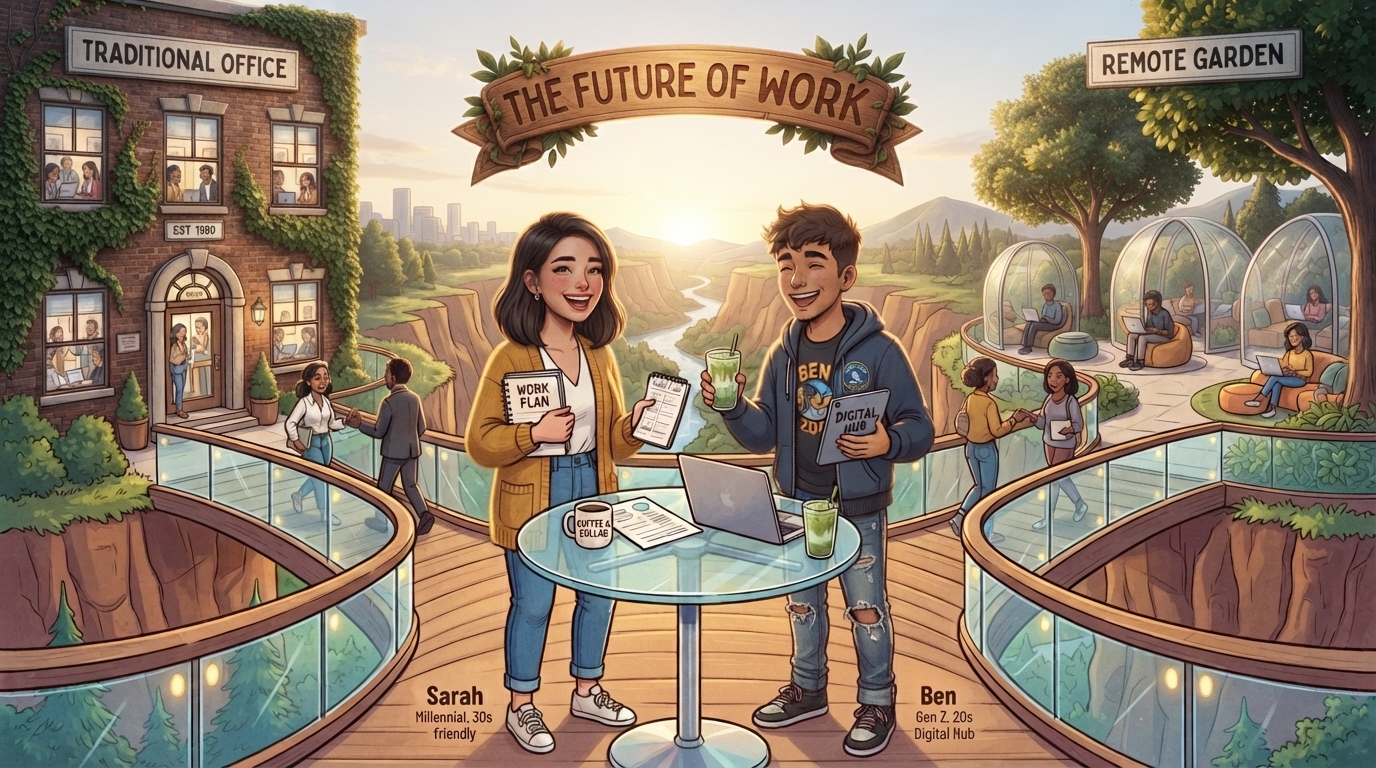
IT'S HOW WE WORK TOGETHER TO ACHIEVE THE SAME GOAL.
Imagine a workplace where people are expected to work hard, but aren't glorified for being exhausted.
Where employees are given flexibility, but are still accountable.
Where experience is respected, but questioning old systems isn't punished.
Where ambition is encouraged, but burnout isn't celebrated.
Where people can build careers without completely abandoning their lives.
That doesn't sound like a Millennial workplace.
Or a Gen Z workplace.
It sounds like a better workplace.
Maybe the real generational question isn't:
“Who has the better attitude toward work?”
Maybe it's:
“What can we learn from each other?”
Because work is changing.
And perhaps the healthiest workplace of the future won't belong to Millennials or Gen Z.
It will belong to people who understand that productivity and humanity don't have to be enemies.
The Generational Clash Over Ambition, Money, Boundaries and Work-Life Balance
Walk into a workplace where Millennials and Gen Z work together and you'll probably find something fascinating.
They're working toward the same company goals.
They may even have the same job title.
But they don't always have the same idea of what a good working life looks like.
One person might say:
“You have to pay your dues.”
Another might ask:
“Why should suffering be part of the job description?”
One values staying with a company for years.
Another sees no problem leaving if the job isn't working for them.
One may see working late as dedication.
Another may see it as a sign that the workload needs fixing.
So who's right?
Perhaps the answer isn't as simple as Millennial vs Gen Z.
These generations entered adulthood under very different circumstances.
And those circumstances shaped how they think about work.
THE MILLENNIAL WORK EXPERIENCE
Many Millennials were raised around a fairly traditional career formula:
Get educated.
Get a job.
Work hard.
Gain experience.
Climb the ladder.
Stay loyal.
Eventually, you'll be rewarded.
For many, working hard meant making sacrifices.
Long hours.
Commuting.
Taking opportunities that weren't perfect.
Staying in difficult jobs to build experience.
Proving yourself before expecting flexibility.
But then the world of work changed.
Technology accelerated.
Remote work expanded.
Social media created new career paths.
And suddenly, the traditional ladder wasn't the only way up.
THEN GEN Z WALKED INTO THE OFFICE
Gen Z entered the workplace with a completely different relationship with technology.
For many of them, the internet wasn't something they adapted to.
It was already there.
They saw people turn content creation into careers.
They watched freelancers work from their bedrooms.
They saw entrepreneurs build businesses online.
They saw employees publicly discuss salaries, workplace culture and burnout.
They also watched people leave jobs and openly talk about why.
So naturally, they began asking different questions.
“Does this job actually work for my life?”
“Why do I have to be physically present if the work can be done remotely?”
“What am I actually learning here?”
“Is this salary worth the lifestyle it's costing me?”
Those questions can sound rebellious to one generation and completely reasonable to another.
IS GEN Z LAZY?
This is probably one of the biggest stereotypes surrounding Gen Z workers.
But let's slow down.
Wanting flexibility doesn't automatically mean someone doesn't want to work.
Wanting boundaries doesn't mean someone lacks ambition.
Wanting meaningful work doesn't mean someone refuses to work hard.
At the same time, Gen Z isn't automatically correct about everything either.
A workplace still requires responsibility.
Deadlines still matter.
Skills still need to be developed.
Experience still matters.
And sometimes you have to do difficult things you don't particularly enjoy.
The challenge is finding the difference between healthy boundaries and avoiding responsibility.
THE NEW MEANING OF AMBITION
For a long time, ambition often looked like this:
Big office.
Big title.
Bigger salary.
More responsibility.
More employees.
More prestige.
But ambition doesn't look the same to everyone anymore.
For one person, ambition means becoming CEO.
For another, it means becoming financially independent.
For another, it means building a business.
For another, it means having a stable nine-to-five and enough time for family.
For another, it means working four days a week and spending the rest of the time doing something they love.
The question is no longer simply:
“How far can you climb?”
It's increasingly becoming:
“What kind of life are you trying to build?”
THE FIGHT OVER WORK-LIFE BALANCE
This is where the generational conversation gets particularly interesting.
Older workplace culture often celebrated the employee who stayed late.
The person who answered emails at midnight.
The person who never said no.
The person who was always available.
But younger workers have increasingly questioned whether that should be considered admirable.
Because what happens when the employee goes home?
They still have a life.
Family.
Friends.
Health.
Responsibilities.
Rest.
Interests.
A career is important.
But it is still only one part of a person's life.
WHAT EACH GENERATION CAN LEARN
Maybe Millennials can teach Gen Z something about patience.
Not every opportunity will be exciting.
Sometimes you have to start at the bottom.
Sometimes expertise takes years.
Sometimes you have to work through uncomfortable seasons.
And maybe Gen Z can teach Millennials something too.
You don't have to sacrifice your entire identity for your career.
Flexibility matters.
Wellbeing matters.
Meaning matters.
And just because something has always been done a certain way doesn't mean it can't be improved.
THE FUTURE OF WORK MAY BE SOMEWHERE IN THE MIDDLE
Imagine a workplace where people are expected to work hard, but aren't glorified for being exhausted.
Where employees are given flexibility, but are still accountable.
Where experience is respected, but questioning old systems isn't punished.
Where ambition is encouraged, but burnout isn't celebrated.
Where people can build careers without completely abandoning their lives.
That doesn't sound like a Millennial workplace.
Or a Gen Z workplace.
It sounds like a better workplace.
Maybe the real generational question isn't:
“Who has the better attitude toward work?”
Maybe it's:
“What can we learn from each other?”
Because work is changing.
And perhaps the healthiest workplace of the future won't belong to Millennials or Gen Z.
It will belong to people who understand that productivity and humanity don't have to be enemies.
Comments (0)
No comments yet. Be the first to share your thoughts.