Education
NOT EVERYTHING YOU READ ONLINE IS EDUCATION
September 29, 2026 · 14 views ·by Emma-Golden
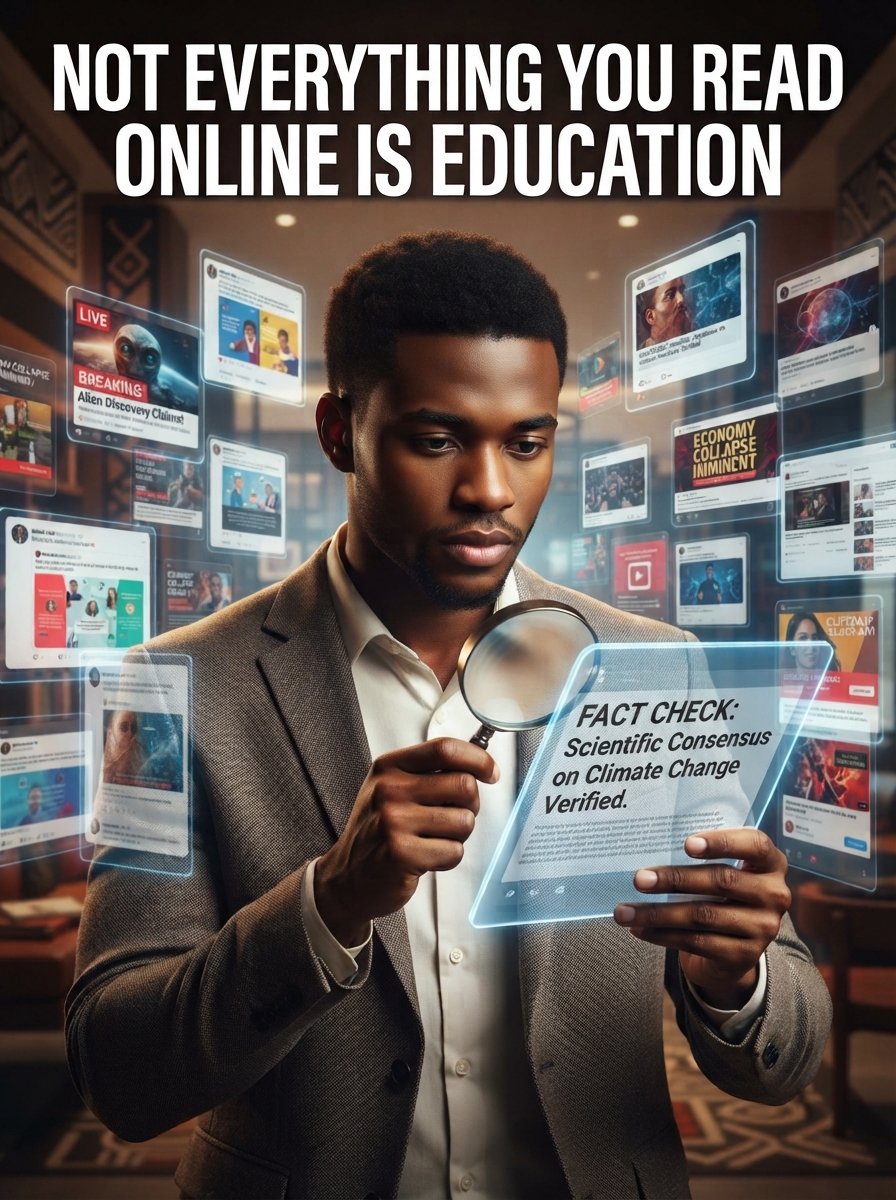
NOT EVERYTHING YOU READ ONLINE IS EDUCATION
The internet has made information incredibly easy to access.
A question that once required finding a book, visiting a library or asking an expert can now be answered within seconds.
But there is a problem.
Information is everywhere.
Reliable information isn't.
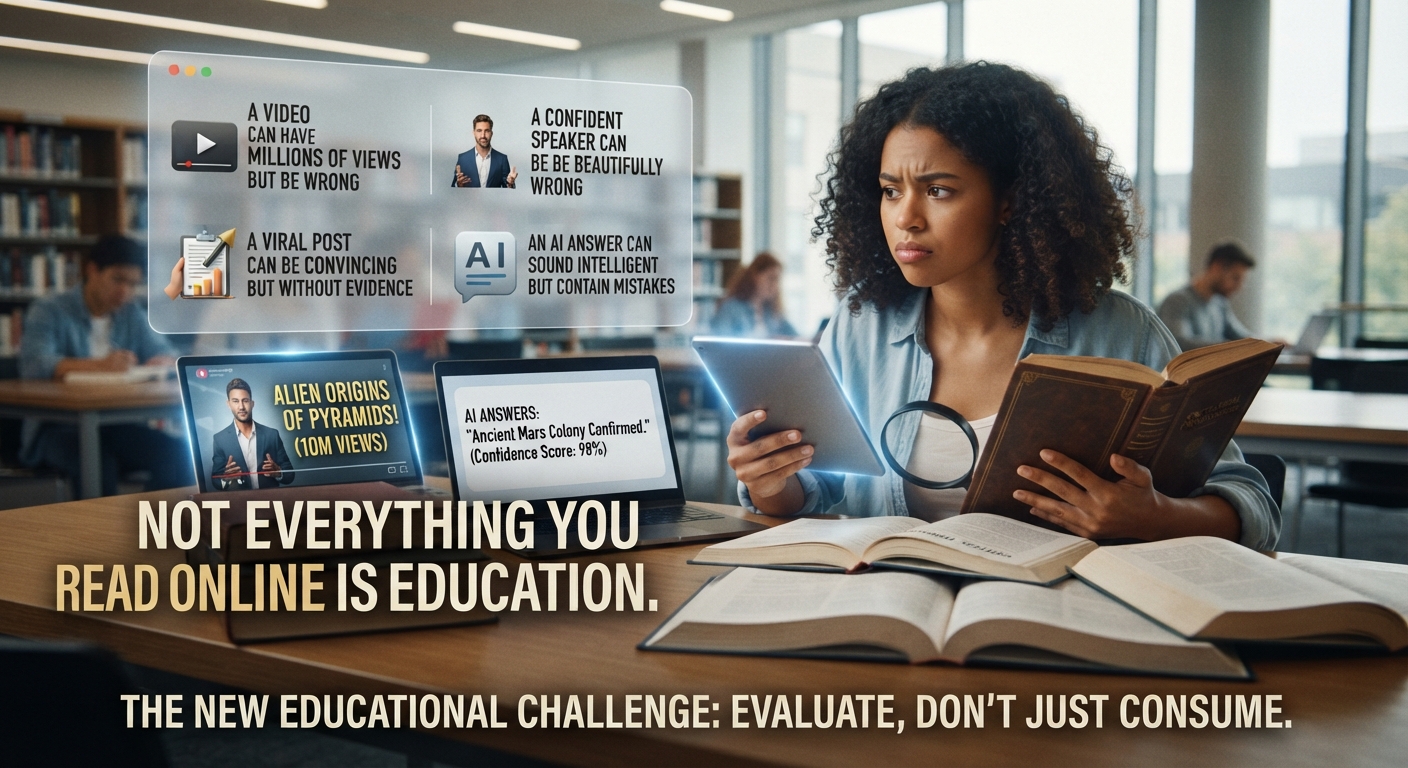
A video can have millions of views and still contain incorrect information.
A confident person can explain something beautifully and still be wrong.
A viral post can look convincing without providing any evidence.
And an AI-generated answer can sound extremely intelligent while still containing mistakes.
This creates a new educational challenge:
People don't only need to know things.
They need to know how to evaluate what they are being told.
POPULARITY ISN'T PROOF
One of the easiest mistakes online is confusing popularity with accuracy.
A post being shared thousands of times doesn't automatically make it true.
A person having a large following doesn't automatically make them an expert.
And a polished video doesn't automatically make its information reliable.
The internet rewards attention.
Accuracy and attention are not the same thing.
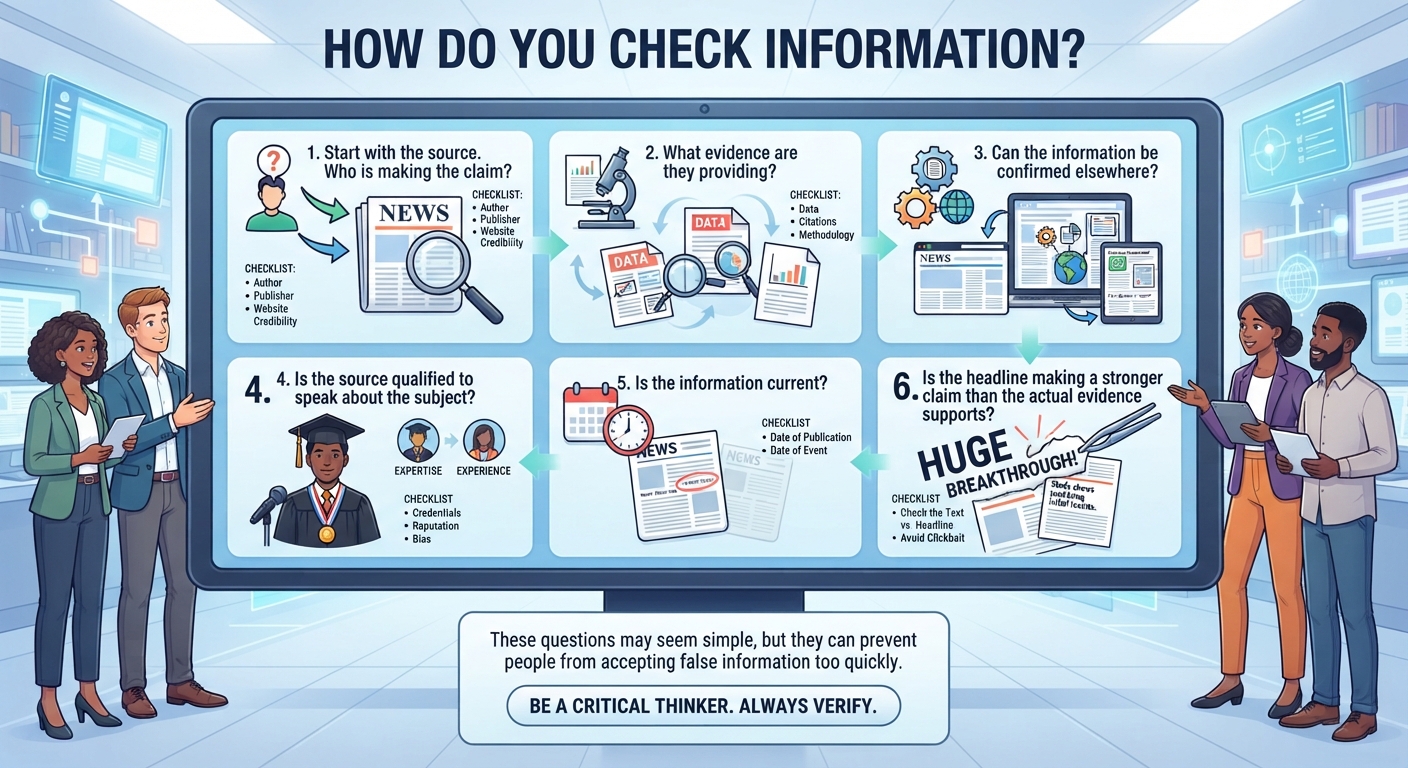
Start with the source.
Who is making the claim?
What evidence are they providing?
Can the information be confirmed elsewhere?
Is the source qualified to speak about the subject?
Is the information current?
Is the headline making a stronger claim than the actual evidence supports?
These questions may seem simple, but they can prevent people from accepting false information too quickly.
AI MAKES THIS EVEN MORE IMPORTANT
Artificial intelligence can help people research, explain difficult subjects, generate ideas and learn new concepts.
But AI should not automatically be treated as an unquestionable authority.
The same principle applies:
Check.
Compare.
Question.
Verify.
Technology can make finding information faster.
It doesn't remove the responsibility to think.
DIGITAL LITERACY IS EDUCATION
Being educated in the modern world increasingly means being able to navigate information intelligently.
It means recognising the difference between:
A fact and an opinion.
Evidence and an assertion.
An expert and someone who simply sounds confident.
A useful source and a viral source.
The internet has given ordinary people access to an extraordinary amount of knowledge.
The challenge now is learning how to separate knowledge from noise.
Because sometimes the most important question isn't:
“Where did I see this?”
It's:
“How do I know it's true?”
Comments (0)
No comments yet. Be the first to share your thoughts.