Management of Change (MOC) and Change Management sound alike, but they focus on different parts of an organization.
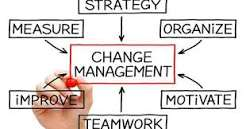
"Be the change you want to see." "People don't resist change, they resist being changed." — Peter Senge "It is not the strongest or the most intelligent that will survive, but those that can best manage change." Charles Darwin "Change is inevitable. Growth is optional." — John C. Maxwell Change management is an element of Management of Change.
The terms Change Management (CM) and Management of Change (MOC) are often used interchangeably, but they represent entirely different operational functions. While both are critical for organizational growth, they target different aspects of a transition: one focuses on human behavior, culture, and business strategy, while the other focuses on engineering controls, technical processes, and physical safety.
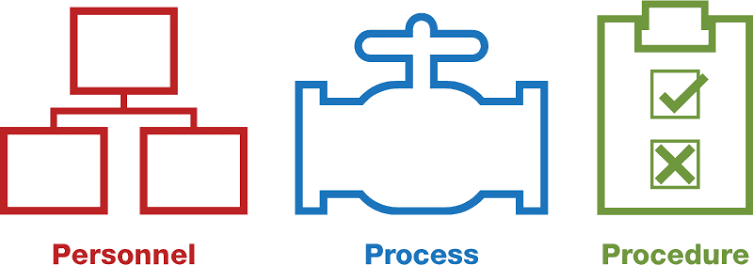
Management of Change (MOC) is a technical and procedural process. It ensures that physical, equipment, or operational updates do not cause safety hazards or risks.
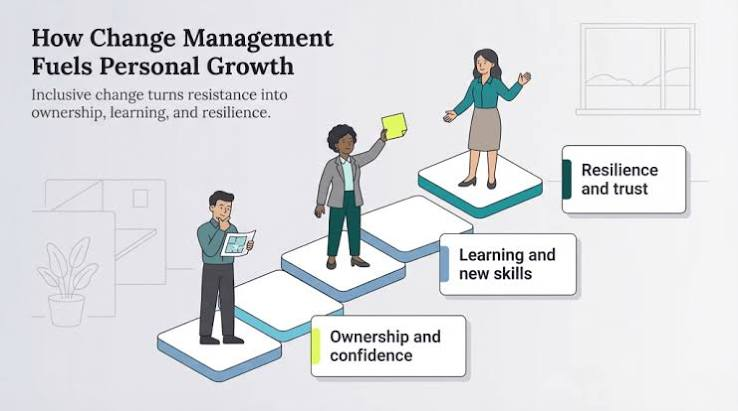
Change Management is a people-centric process. It guides employees through behavioral, emotional, and organizational shifts so they accept new ways of working.
For a business to scale sustainably, both frameworks must operate in harmony:
The Strategy: Senior leadership leverages Change Management to align the workforce with an overarching vision of digital transformation or modernization.
The Execution: The engineering and technical teams use Management of Change protocol to ensure the new physical infrastructure, equipment, and technical workflows are deployed safely, legally, and without operational error
Management of Change (MOC)is a technical and procedural process. It ensures that physical, equipment, or operational updates do not cause safety hazards or risks. Change Management is a people-centric process. It guides employees through behavioral, emotional, and organizational shifts so they accept new ways of working. Core Differences
Feature of Management of Change (MOC) Primary Focus Systems, equipment, procedures, and safety. Main Goal Preventing technical failures, accidents, and regulatory violations. Common Industry Engineering, manufacturing, and chemical plants. Key Steps Risk analysis, testing, approval, and updating technical documents.
Feature of Change Management Primary Focus Human behavior, communication, and adoption. Main Goal Reducing employee resistance and building long-term morale. Common Industry General business, corporate offices, and healthcare. Key Steps Stakeholder analysis, leadership engagement, training, and feedback.
Management of Change (MOC)
What it does: Acts as a strict check-and-balance system before altering hardware, chemicals, or operating limits. Where it is used: Highly regulated industrial environments where a single mistake can cause severe physical harm or environmental damage. Example: Adjusting the operating temperature or replacing a valve on a refinery unit.
Risk management Change Management What it does: Supports the human side of business transitions. Where it is used: Universal application across any business setting undergoing a cultural or procedural overhaul. Example: Training staff and addressing concerns when a company adopts a new customer service software.
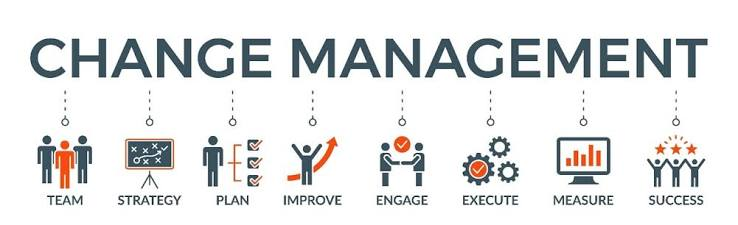
Definition: A structured approach to guiding individuals and teams from a current state to a desired future state by addressing the human experience.
Methodology: It utilizes frameworks like Prosci's ADKAR Model to build awareness, desire, and capability among staff.
Application: Universal across sectors, such as banks launching digital apps or hospitals updating patient records systems.
Management of Change (MOC)
Definition: A rigorous, highly procedural review system often tied to Process Safety Management (PSM).
Methodology: It requires formal risk analysis, technical testing, authorization by designated authorities, and the updating of physical blueprints and manuals.
Application: Specialized in high-stakes industrial fields like oil refineries, chemical plants, and heavy manufacturing.
Key Components of the MoC Process
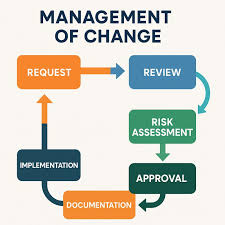
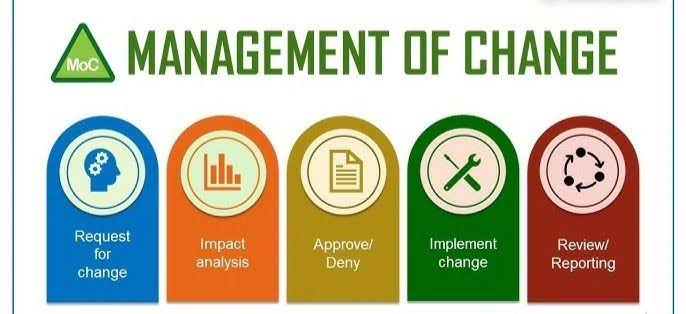
A standard Management of Change workflow relies on several formal steps to ensure safety is never compromised:
Initiation: Clearly document and submit the proposed modification, whether it involves new machinery, a chemical shift, or a revised standard operating procedure.
Risk Assessment: Experts analyze the potential safety, health, and environmental hazards that the adjustment might introduce.
Review and Approval: Designated engineering, safety, and operational teams formally review the risk controls and authorize the change.
Implementation & Training: Update all technical documentation, retrain affected staff and contractors, and execute the physical or procedural update.
Closure & Auditing: Verify that the change is fully operational, documentation is permanently archived, and post-implementation monitoring is active.
Comments (0)
No comments yet. Be the first to share your thoughts.