A strategic alliance is a cooperative arrangement where two or more independent companies join forces to achieve shared business goals without merging into a single legal entity.
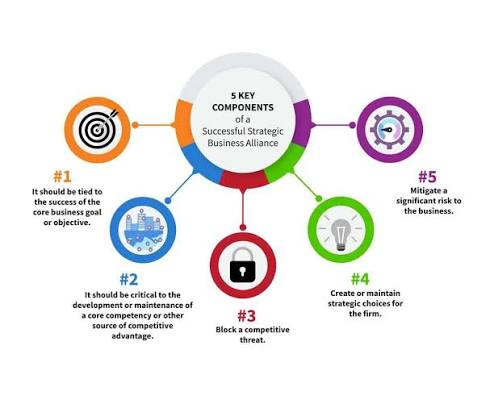
Organizational growth through strategic alliances is a deliberate expansion approach that combines complementary capabilities, accelerates market access, and reduces execution risk compared with purely internal development. Effective alliances typically begin with a clear strategic rationale—such as entering new geographies, acquiring technology or distribution, or meeting customer needs faster—followed by rigorous partner selection based on capability fit, cultural compatibility, financial stability, and track record in delivering shared outcomes. Governance is critical: roles and decision rights should be defined upfront, with joint steering mechanisms, performance metrics, and escalation paths to manage interdependencies.
Commercial structure must align incentives through well-defined scope, pricing or revenue-sharing models, IP ownership and licensing terms, and service-level commitments that reflect operational realities. To sustain growth, organizations should integrate alliance activities into core planning and budgeting, establish data-sharing and reporting processes, and ensure operational readiness across teams and systems. Risk management should address regulatory and antitrust considerations, dependency risks, confidentiality and cybersecurity controls, and continuity plans if the alliance underperforms or partners change priorities. When executed with measurable objectives—such as revenue contribution, cost-to-serve improvements, time-to-market reduction, or capability milestones—strategic alliances can compound into durable competitive advantage by building reusable competencies, strengthening customer relationships, and enabling scalable growth beyond what either organization could achieve alone.
Famous Examples of Companies Formed or Linked by Alliances
Walgreens Boots Alliance: Formed incrementally after Alliance Boots and Walgreens combined operations following an initial strategic partnership.
Star Alliance: A massive global network linking independent airlines like Lufthansa, United Airlines, and Air Canada to share routes and frequent flyer programs.
Spotify & Uber: A co-marketing and product alliance allowing riders to stream their personal music playlists during trips.
Starbucks & Target: A retail partnership placing branded coffee shops inside major department store locations.
Alliance One International: Formed through the merger/alliance of DIMON Incorporated and Standard Commercial Corporation. Partnership Key Benefits
Market Expansion: Enter new geographic regions or customer segments quickly using a partner’s local expertise and distribution networks.
Risk and Cost Sharing: Lower financial burdens for expensive projects like research and development or new technology rollouts.
Resource Pooling: Access complementary skills, intellectual property, or advanced infrastructure that would take too long to build alone. Insights can be found in detailed discussions on Growth via Strategic Alliances.
🔎 Why Alliances Drive Growth
Organizations typically seek strategic partnerships when organic expansion is too slow or resource-intensive to keep pace with changing market conditions. Alliances unlock value through four distinct pillars:
Synergizing Strengths: Partners combine unique, complementary capabilities (such as combining one firm's advanced AI software with another's massive global distribution network) to create superior market offerings.
Market & Network Access: Rather than spending years building local infrastructure, brands leverage an ally's established customer base, regulatory expertise, and regional supply chains to expand globally overnight.
Risk & Cost Mitigation: High-exposure ventures, such as pioneering research & development (R&D) or building specialized manufacturing facilities, become viable when financial responsibilities and potential losses are divided.
Agility and Speed: Alliances bypass the severe managerial complexities and cultural friction often triggered by full corporate mergers, allowing firms to pivot or exit fluidly.


Comments (0)
No comments yet. Be the first to share your thoughts.