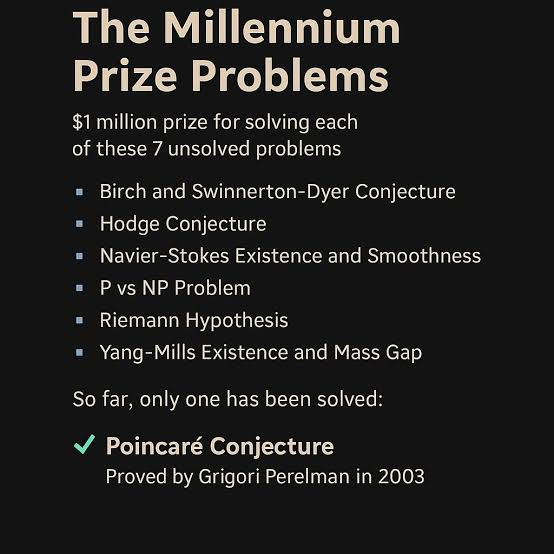
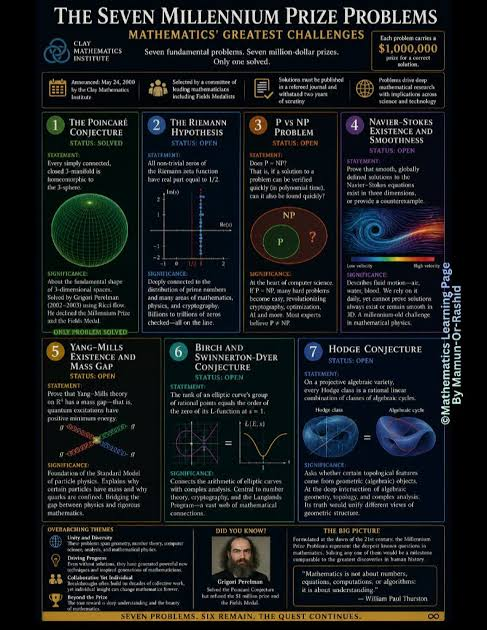
Poincaré Conjecture: States that any smooth, finite, hole-free 3D shape must resemble a sphere. It was proven by Russian mathematician Grigori Perelman in 2003, who famously declined both the prize money and the Fields Medal.
1. Navier–Stokes Existence and Smoothness (Disputed / Recent Breakthrough)
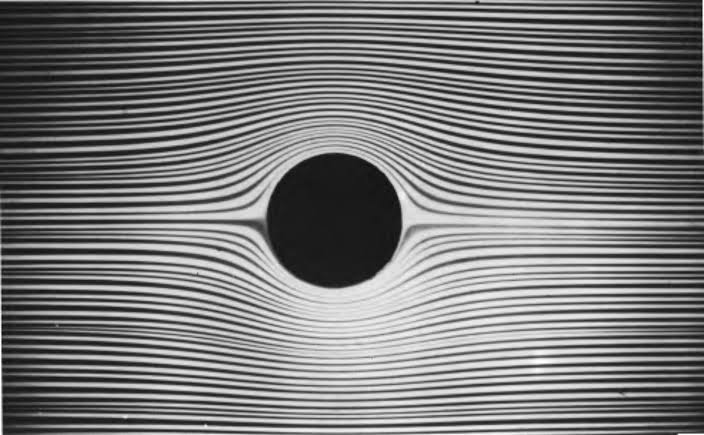
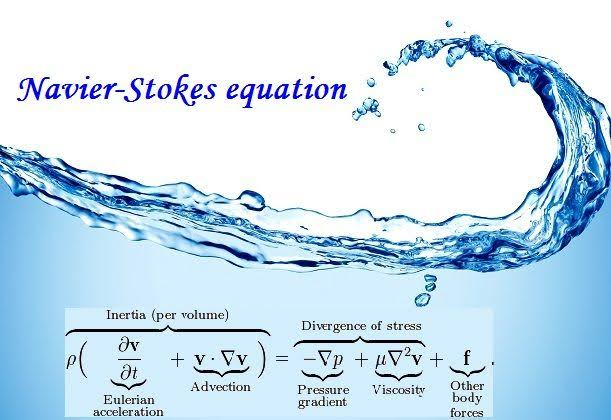
The Core Question: Do the nineteenth-century differential equations that govern fluid motion (like air, blood flow, or ocean waves) always produce smooth, physically reasonable solutions, or can they break down and "blow up"?
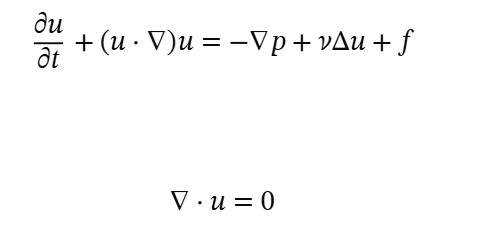
The problem centers on the three-dimensional incompressible Navier-Stokes equations that describe how fluids like water and air move:
Current Status:Disputed / Active Evaluation. In September 2026, OpenAI published an analytical proof demonstrating that an initially smooth fluid at rest can develop a finite-time mathematical singularity (a point where velocity becomes unbounded). This functions as a counterexample to the smoothness claim. While an exciting application of AI to pure mathematics, it has sparked significant debate and competitive rush within the research community.
2. The Riemann Hypothesis (Unsolved)
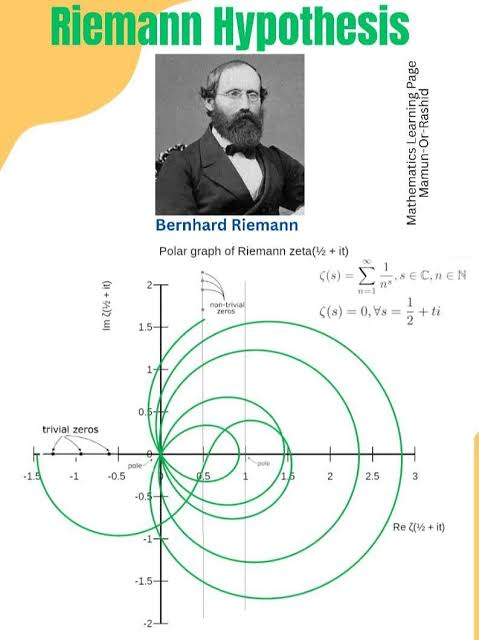
The Core Question: Do all the non-trivial zeros of the Riemann zeta function lie on a single, vertical critical line Re(s) = 1/2?
The Riemann Hypothesis is one of the most famous and important unsolved problems in mathematics. First proposed by German mathematician Bernhard Riemann in 1859, it offers deep insights into the distribution of prime numbers.
Why It Matters: Considered by many mathematicians to be the most important open problem in pure mathematics, proving it would unlock a deeply hidden harmonic pattern governing how prime numbers are distributed across the universe.
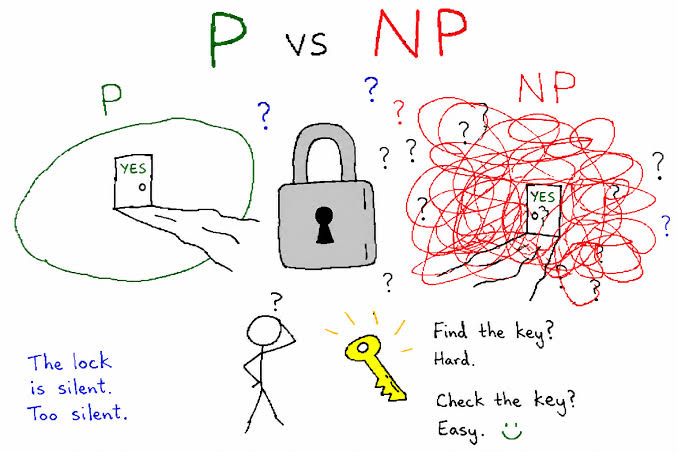
The Core Question: If the solution to a problem can be verified quickly by a computer, can that solution also be found quickly by a computer?
The P versus NP problem is a fundamental, unsolved question in computer science and mathematics. It asks whether every problem whose positive solution can be quickly verified by a computer can also be quickly solved by a computer
Why It Matters: This is the most practically consequential problem for the digital age. If P = NP, it means computationally difficult problems (like breaking modern cryptography, optimizing global logistics, or predicting protein folding) have fast, hidden mathematical shortcuts.
4. Yang–Mills Existence and Mass Gap (Unsolved)
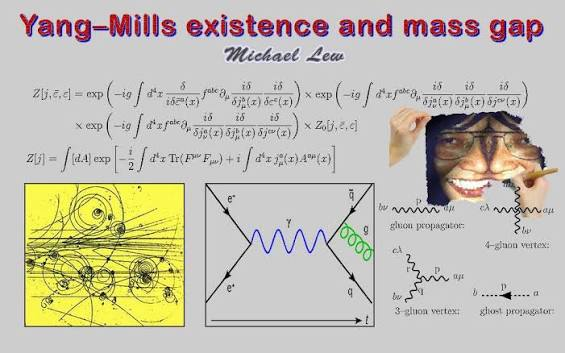
The Core Question: Can we construct a mathematically rigorous foundation for quantum Yang–Mills theory, and prove why the fundamental particles carrying the strong nuclear force possess a non-zero mass (the "mass gap") even though the theory predicts they should be massless?
Why It Matters: It bridges the gap between successful experimental quantum physics and strict mathematical proof.
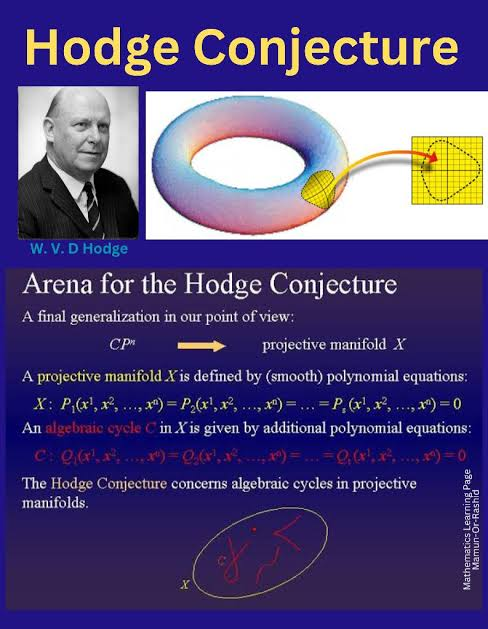
The Core Question: Can complex geometric shapes (projective algebraic varieties) be entirely understood and reconstructed by gluing together simpler, purely algebraic building blocks?
Why It Matters: It acts as a profound mathematical highway connecting topology (the study of shapes), analysis, and algebraic geometry.
6. The Birch and Swinnerton-Dyer Conjecture (Unsolved)
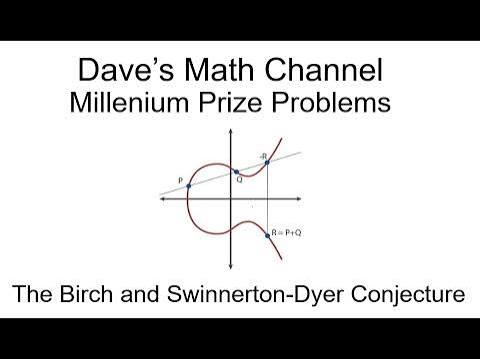
The Core Question: Is there an easy, predictable way to determine whether an elliptic curve equation has a finite or an infinite number of rational solutions?
The Birch and Swinnerton-Dyer ConjectureThe Birch and Swinnerton-Dyer (BSD) conjecture states that the algebraic rank of an elliptic curve (the number of independent rational points) is equal to its analytic rank
Why It Matters: Elliptic curves are vital to modern algebraic number theory and form the backbone of advanced cryptographic security frameworks.
Comments (0)
No comments yet. Be the first to share your thoughts.