Lifestyle
WHY DO WE REMEMBER EMBARRASSING MOMENTS FROM 10 YEARS AGO?
August 7, 2026 · 17 views
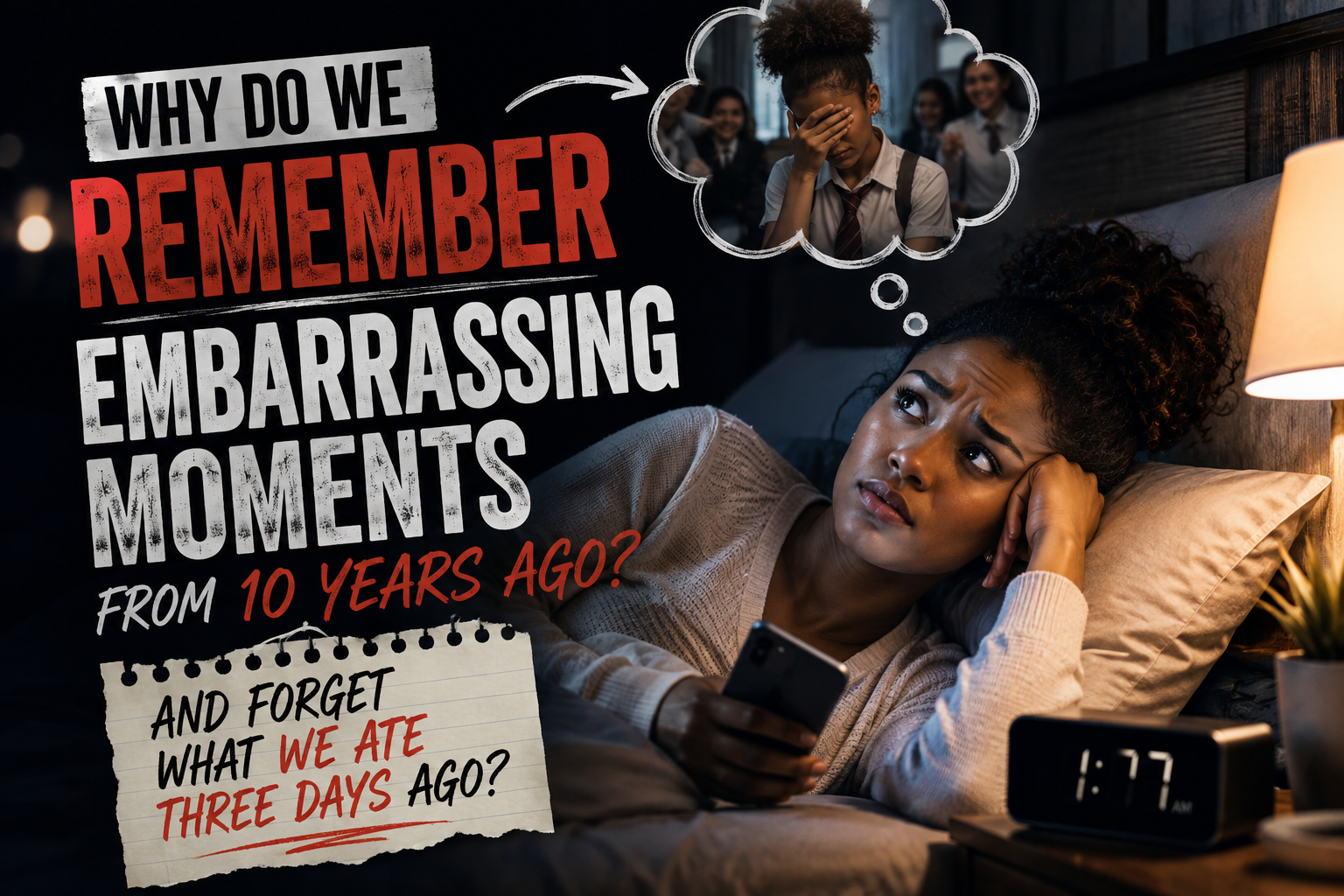
WHY DO WE REMEMBER EMBARRASSING MOMENTS FROM 10 YEARS AGO?
And Forget What We Ate Three Days Ago
It's 1:17 a.m.
You're lying peacefully in bed.
Suddenly, your brain says:
“Remember that embarrassing thing you did in secondary school?”
You freeze.
“No.”
Your brain continues anyway.
You remember the room.
The people.
What you were wearing.
What you said.
Their reactions.
Every painful detail.
And somehow, this happened ten years ago.
Meanwhile, you can't remember what you had for lunch three days ago.
Why?
Because your brain doesn't treat every memory equally.
Emotional moments tend to leave stronger impressions than ordinary ones.
Embarrassment is particularly powerful because it involves something humans care deeply about:
How other people see us.
THE MOMENT YOUR BRAIN REFUSES TO DELETE
Imagine accidentally calling your teacher “Mummy.”
You probably laugh about it now.
But at the time?
It felt like the end of civilization.
Everyone laughed.
Your face became hot.
You wanted the floor to open.
Your brain registered the entire experience as emotionally significant.
Years later, it can still retrieve it.
Not because your brain hates you.
But because emotional experiences can become deeply associated with memory.
Your brain essentially said:
“Important. Remember this.”
Unfortunately, it doesn't always understand that you don't need the reminder at 1 a.m.

THOSE MOMENTS THE BRAIN REFUSES TO FORGET.
THE FUNNY THING ABOUT EMBARRASSMENT
Most of the people who witnessed your embarrassing moment probably don't remember it.
Think about that.
The moment that occupied your mind for years may have been a forgettable Tuesday for everyone else.
You remember your mistake because you were the centre of your own experience.
Everyone else was busy being the centre of theirs.
That means there's a good chance that many of the things you still feel embarrassed about are far less important to other people than they are to you.
WE ARE OFTEN OUR OWN HARDEST AUDIENCE
Think about how you talk to yourself after making a mistake.
Would you speak to your best friend the same way?
Probably not.
You'd say:
“It's okay.”
“Everyone makes mistakes.”
“You were nervous.”
“It's not that serious.”
But when it's you?
Suddenly, you're a courtroom, prosecutor, judge and jury.
We replay the moment.
Analyze the wording.
Question the facial expression.
Wonder what everyone thought.
And sometimes we punish ourselves for something nobody else even remembers.
YOUR EMBARRASSING MOMENTS ARE PART OF YOUR STORY
Growing up means collecting awkward moments.
You will say the wrong thing.
Wear the wrong outfit.
Trip in public.
Forget someone's name.
Send a message to the wrong person.
Mispronounce a word.
Make a terrible decision.
That's life.
A perfectly unembarrassing life would probably be a life with very little experimentation.
You have to try things to occasionally look foolish.
And sometimes, the embarrassing version of you is simply evidence that you were learning.
So when your brain suddenly pulls out an ancient embarrassing memory, don't fight it.
Smile.
Say:
“Wow. I survived that.”
Then let it go.
Because you are not the person who made that mistake ten years ago.
You're the person who lived through it, learned from it, and kept going.
And honestly?
That deserves more attention than the mistake ever did.
And Forget What We Ate Three Days Ago
It's 1:17 a.m.
You're lying peacefully in bed.
Suddenly, your brain says:
“Remember that embarrassing thing you did in secondary school?”
You freeze.
“No.”
Your brain continues anyway.
You remember the room.
The people.
What you were wearing.
What you said.
Their reactions.
Every painful detail.
And somehow, this happened ten years ago.
Meanwhile, you can't remember what you had for lunch three days ago.
Why?
Because your brain doesn't treat every memory equally.
Emotional moments tend to leave stronger impressions than ordinary ones.
Embarrassment is particularly powerful because it involves something humans care deeply about:
How other people see us.
THE MOMENT YOUR BRAIN REFUSES TO DELETE
Imagine accidentally calling your teacher “Mummy.”
You probably laugh about it now.
But at the time?
It felt like the end of civilization.
Everyone laughed.
Your face became hot.
You wanted the floor to open.
Your brain registered the entire experience as emotionally significant.
Years later, it can still retrieve it.
Not because your brain hates you.
But because emotional experiences can become deeply associated with memory.
Your brain essentially said:
“Important. Remember this.”
Unfortunately, it doesn't always understand that you don't need the reminder at 1 a.m.
THE FUNNY THING ABOUT EMBARRASSMENT
Most of the people who witnessed your embarrassing moment probably don't remember it.
Think about that.
The moment that occupied your mind for years may have been a forgettable Tuesday for everyone else.
You remember your mistake because you were the centre of your own experience.
Everyone else was busy being the centre of theirs.
That means there's a good chance that many of the things you still feel embarrassed about are far less important to other people than they are to you.
WE ARE OFTEN OUR OWN HARDEST AUDIENCE
Think about how you talk to yourself after making a mistake.
Would you speak to your best friend the same way?
Probably not.
You'd say:
“It's okay.”
“Everyone makes mistakes.”
“You were nervous.”
“It's not that serious.”
But when it's you?
Suddenly, you're a courtroom, prosecutor, judge and jury.
We replay the moment.
Analyze the wording.
Question the facial expression.
Wonder what everyone thought.
And sometimes we punish ourselves for something nobody else even remembers.
YOUR EMBARRASSING MOMENTS ARE PART OF YOUR STORY
Growing up means collecting awkward moments.
You will say the wrong thing.
Wear the wrong outfit.
Trip in public.
Forget someone's name.
Send a message to the wrong person.
Mispronounce a word.
Make a terrible decision.
That's life.
A perfectly unembarrassing life would probably be a life with very little experimentation.
You have to try things to occasionally look foolish.
And sometimes, the embarrassing version of you is simply evidence that you were learning.
So when your brain suddenly pulls out an ancient embarrassing memory, don't fight it.
Smile.
Say:
“Wow. I survived that.”
Then let it go.
Because you are not the person who made that mistake ten years ago.
You're the person who lived through it, learned from it, and kept going.
And honestly?
That deserves more attention than the mistake ever did.
Comments (0)
No comments yet. Be the first to share your thoughts.