Education
WHY DOES THE SCHOOL BELL DECIDE WHEN YOU LEARN?
August 12, 2026 · 34 views
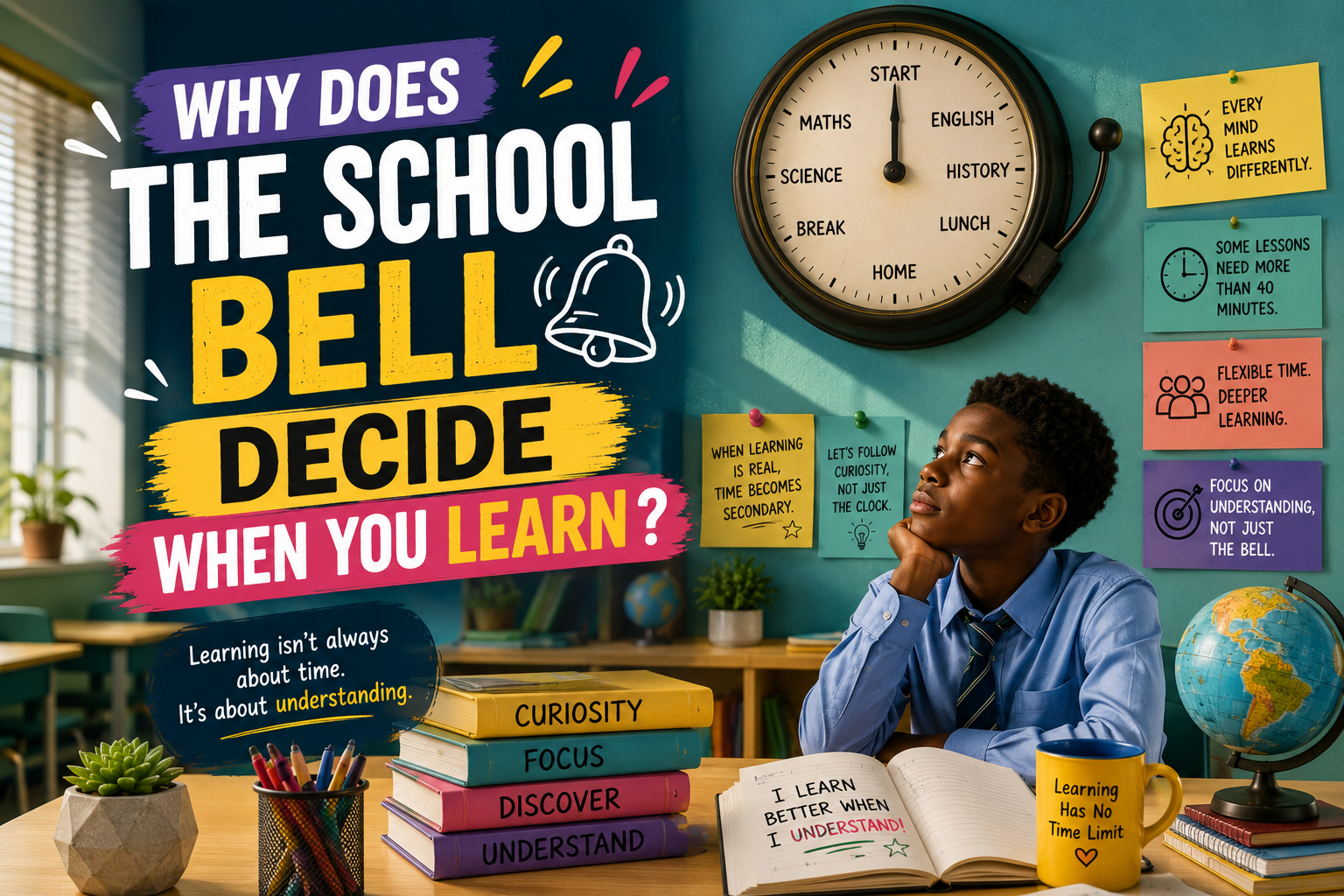
WHY DOES THE SCHOOL BELL DECIDE WHEN YOU LEARN?
Think about how strange the school bell really is.
One sound tells you:
Start.
Another sound tells you:
Stop.
A bell rings and Mathematics begins.
Another rings and Mathematics ends, even if the class has just reached the most interesting part.
Then another bell sends everyone somewhere else.
English.
Science.
Break.
History.
Lunch.
Home.
The bell has been quietly controlling the rhythm of school life for generations.
Does learning really happen according to a clock?
Imagine you're completely absorbed in a science experiment.
You finally understand what you've been struggling with for weeks.
Then
RIIIIING!
Class over.
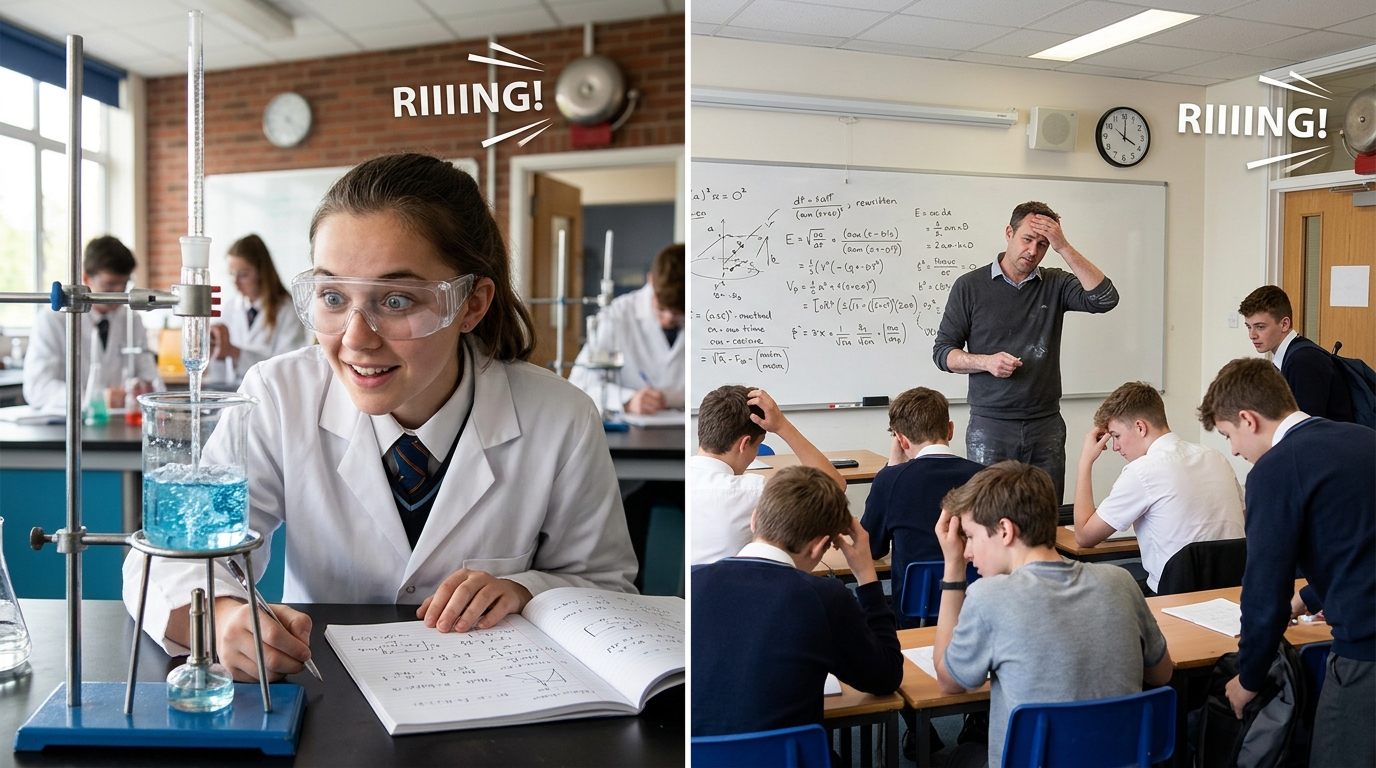
Now imagine another day when the teacher has explained something three different ways and half the class still doesn't understand it.
The bell rings.
Time's up.
But did learning happen simply because the scheduled forty minutes ended?
Not necessarily.
This doesn't mean schools should throw away timetables.
Schedules are important. They create structure, help teachers plan and allow schools to function.
Perhaps we should remember that time spent in a classroom isn't automatically the same as time spent learning.
Some students understand something in ten minutes.
Others need thirty.
Some lessons need discussion.
Some need experimentation.
Some need repetition.
Some need students to simply sit with an idea for a while.
And sometimes the most powerful learning happens when a teacher notices that the class is genuinely engaged and decides:
"Let's stay with this a little longer."
Maybe the future of education isn't about removing structure.
Maybe it's about making structure flexible enough to follow how people actually learn.
Because the bell can tell us when a lesson is supposed to end.
It can't always tell us when learning is complete.
Comments (0)
No comments yet. Be the first to share your thoughts.