Lifestyle
Your Perfume Obsession Is Older Than You Think.
August 12, 2026 · 31 views
Your Perfume Obsession Is Older Than You Think.
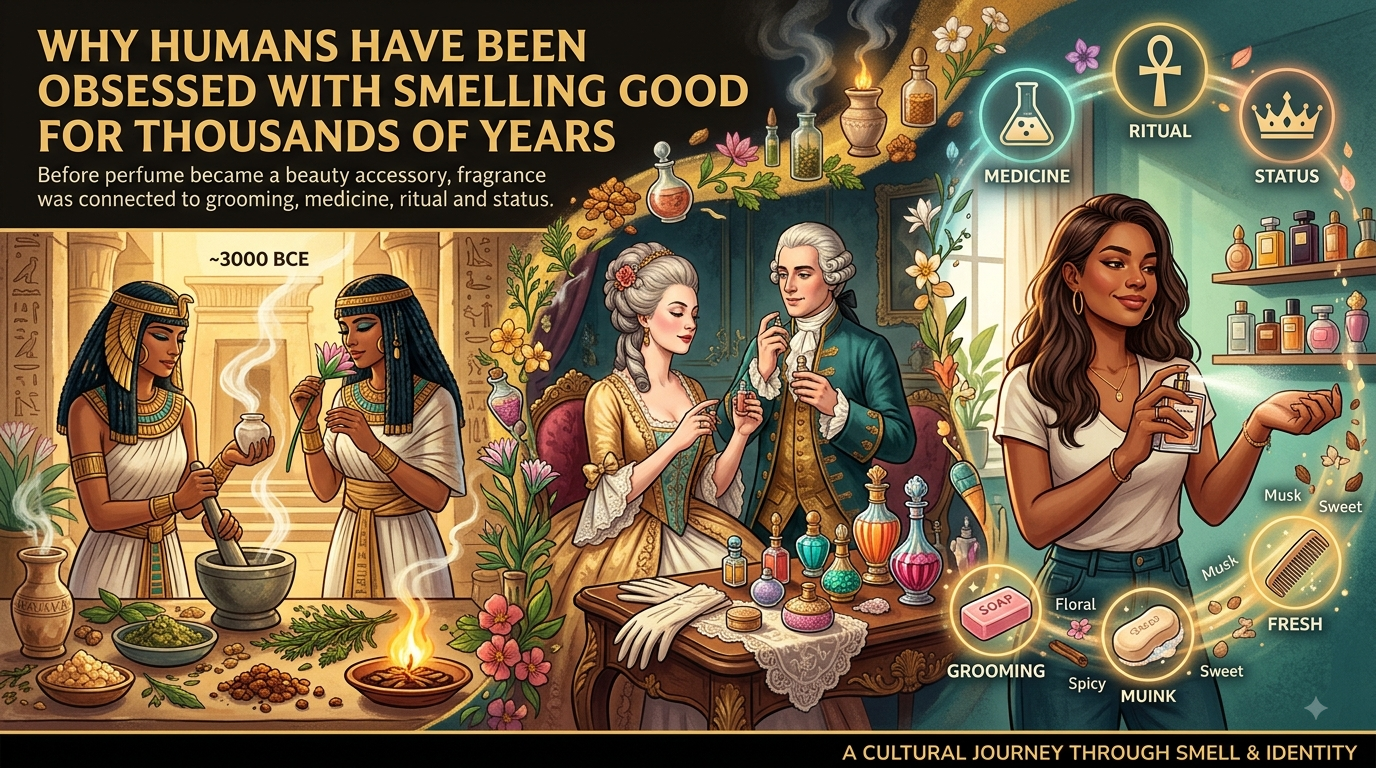
Before perfume became a beauty accessory, fragrance was connected to grooming, medicine, ritual and status.
Imagine standing in front of your perfume collection.
Floral.
Woody.
Fresh.
Sweet.
Spicy.
Vanilla.
Musk.
You spray a little on your wrist, another little behind your ears and maybe one final spray before leaving the house.
It feels completely normal.
But humans have been fascinated by fragrance for an incredibly long time.
Long before modern perfume bottles lined bathroom shelves, people were already finding ways to make their bodies, clothing and surroundings smell pleasant.
IT WASN'T ALWAYS ABOUT LUXURY
Today, perfume can be associated with luxury.
A beautiful bottle.
An expensive brand.
A signature scent.
But fragrance had many different roles throughout history.
The Smithsonian notes that fragrant essential oils, herbs, extracts and mineral salts were used in preparations that crossed the boundary between cosmetics and medicines.
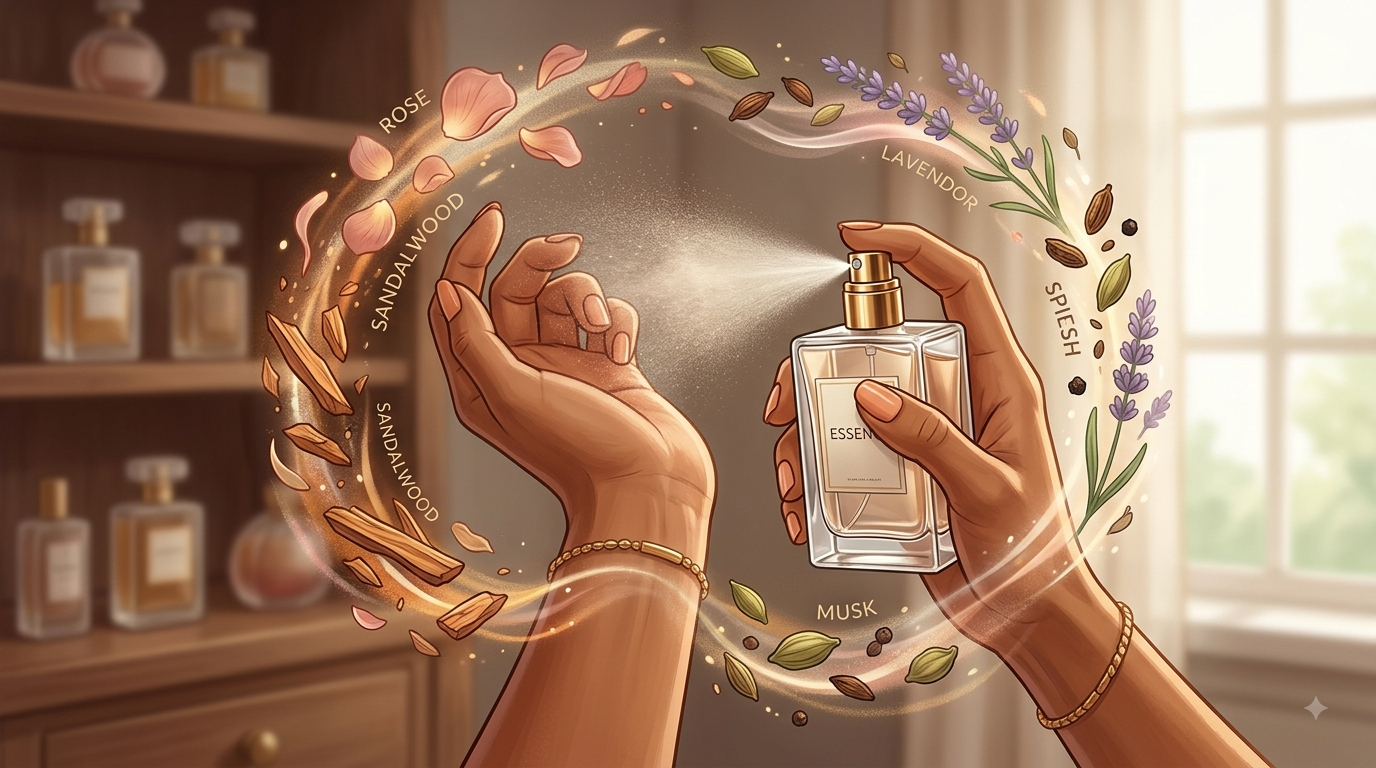
Lavender, rose, sandalwood and musk, for example, were among the scents used in personal-care products.
So fragrance wasn't simply:
“I want to smell expensive.”
It could also be about grooming, masking unpleasant smells and making everyday products more appealing.
BEFORE DEODORANT, THERE WAS PERFUME
Here's something many people don't think about.
Modern deodorants and antiperspirants weren't widely marketed until the early twentieth century.
Before then, people who could afford to mask body odour often used perfumes on clothing and handkerchiefs.
Soap makers also began adding fragrance to soaps to make them more attractive and leave a pleasant scent on the skin.
That means some of the things we now consider separate categories; soap, perfume, grooming and personal care, were historically connected.
FRAGRANCE COULD SAY SOMETHING ABOUT YOU
Smell is deeply connected to memory and perception.
Think about what happens when you suddenly smell a fragrance you associate with someone.
You may immediately remember them.
A particular perfume can remind you of your mother.
A scent can transport you back to a particular house.
A particular soap can remind you of childhood.
A fragrance can bring back a person, a place or an entire period of your life.
That is one reason perfume is more than a pleasant smell.
It can become part of someone's identity.
THE RISE OF THE SIGNATURE SCENT
Eventually, fragrance became increasingly connected with personal style.
Just as someone might have a favourite colour or clothing style, they could have a scent that felt uniquely theirs.
And that idea remains powerful today.
Some people don't simply want to smell nice.
They want people to recognize them by their scent.
That's why you hear phrases like:
“This smells like you.”
The fragrance has become part of the person's identity.
PERFUME BECAME MORE ACCESSIBLE
For a long time, certain fragrances were strongly associated with wealth and status.
But advances in production and scent extraction eventually helped make perfumes more affordable and accessible to a wider audience.
The Smithsonian notes that by the twentieth century, synthetic scents and new extraction technologies were helping reduce production costs and broaden access.
And today?
You don't need to be royalty to have a signature scent.
You can find fragrance at almost every price point.
WE'RE STILL OBSESSED
Look at today's fragrance culture.
Perfume collections.
Body mists.
Scent layering.
Perfume reviews.
“What's your signature scent?”
“Which perfume lasts all day?”
“What's that fragrance you're wearing?”
People debate notes the way others debate music.
And interestingly, a 2026 study examining perfume compositions from 1900 to 2024 describes perfume as a cultural form of sensory expression, showing how fragrance styles have evolved over time.
Our obsession isn't really about perfume.
It's about something deeper.
We want to leave an impression.
We want to feel fresh.
We want to express ourselves.
We want to be remembered.
Sometimes, we want to walk into a room and have someone think:
“Who smells that good?”
Thousands of years later, humans are still doing essentially the same thing.
The bottles changed.
The ingredients changed.
The technology changed.
But the desire remains.
We don't just want to look good when we enter a room.
We want to leave something behind when we leave it.
Comments (0)
No comments yet. Be the first to share your thoughts.